
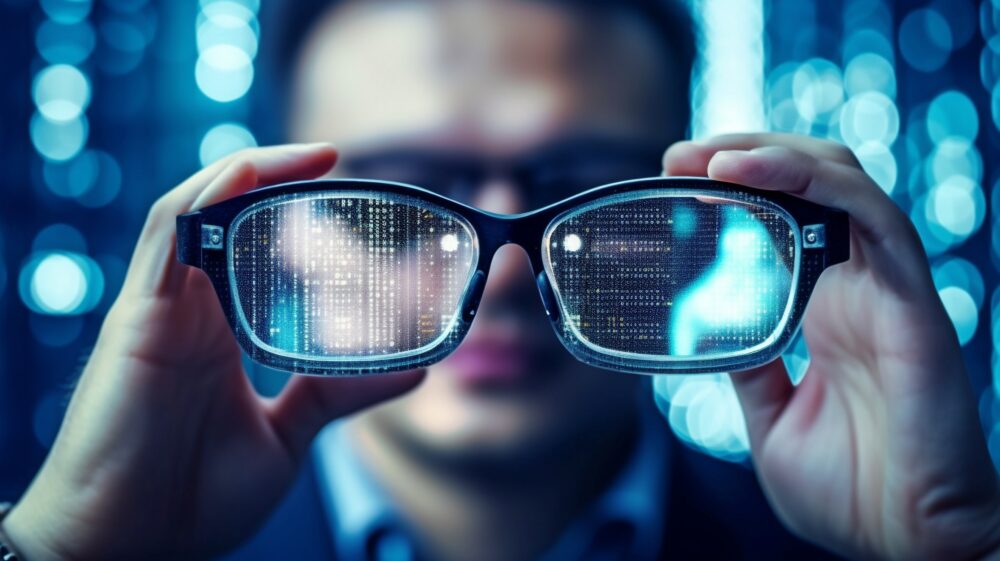
Explore whether smart glasses are truly the next computing interface or just a passing fad in 2025—with market data, real-life use cases, expert analysis.
Smart glasses—wearable devices that merge optics, sensors, and AI—are being hailed as the next major interface for human-computer interaction. While they still face hurdles like battery life, privacy, and social acceptance, advances in AR/AI, optics, and miniaturization are rapidly pushing them from novelty toward mainstream use.
Are Smart Glasses the Next Interface or Just a Fad?
Why This Question Matters Now
Tech giants like Meta, Apple, and Xiaomi are racing to define the future of smart eyewear. The idea is bold: to make computing invisible, ambient, and always with you.
But the question remains—are smart glasses a lasting interface or another tech experiment destined to fade away?
In this definitive guide, we’ll explore:
- Market trends & adoption data
- Technical and social challenges
- Real-world use cases and examples
- Consumer perceptions and expert predictions

1. What Exactly Are Smart Glasses and What Is an “Interface”?
Before deciding if they’re the next big thing, let’s clarify what we’re talking about.
Smart glasses are eyewear enhanced with:
- Micro-displays or AR overlays
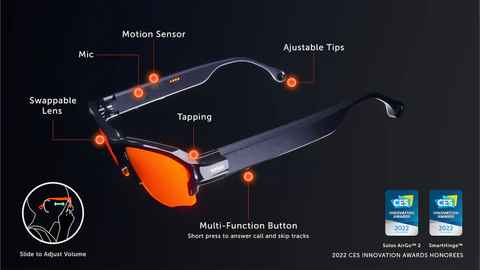
- Sensors, microphones, cameras, and connectivity (Wi-Fi, Bluetooth)
- Built-in processors or AI integration
They combine computing and vision—blending the physical and digital worlds right before your eyes.
An interface, on the other hand, is the medium between humans and computers. We’ve evolved from:
- Keyboards → Touchscreens → Voice Assistants → Wearables → Ambient Interfaces
So, asking “Are smart glasses the next interface?” means asking whether they’ll replace phones and screens as our primary way of experiencing technology.
2. Market Trends and Growth: Are Smart Glasses the Future of Computing?
1 Explosive Market Growth
According to, the global smart glasses market was worth $1.93 billion in 2024, projected to hit $8.26 billion by 2030—a compound annual growth rate (CAGR) of 27.3%.
projects even stronger momentum—a 60% CAGR through 2029—fueled by the success of Ray-Ban Meta glasses.
Other reports show:
- 12.8 million smart eyewear units expected to ship in 2025 (IDC).
- North America alone valued at $2.39 billion (2024), growing at 25.7% CAGR (Cognitive Market Research).
- EssilorLuxottica (parent of Ray-Ban) plans to produce 10 million units annually by 2030.
2 Consumer Interest Rising
According to, urban users and parents are most interested in buying smart glasses in 2025.
AR adoption overall will surpass 30% of the U.S. population by 2025—outpacing VR.
Meanwhile, Ray-Ban Meta has already crossed 1 million units sold, marking the first real consumer traction in smart eyewear.
Verdict: The market is heating up. Adoption curves look similar to early smartwatch trajectories—slow at first, then exponential once social proof kicks in.
3. Why Now? The Convergence That Makes Smart Glasses Possible
1 Miniaturization & Optics Innovation
Thanks to breakthroughs in waveguides, micro-OLED displays, and photonic chips, what used to require a headset can now fit in lightweight frames.
Researchers at Stanford University developed AI-powered holographic displays that can render full-color, high-contrast 3D images within glasses-like form factors—closing the gap between sci-fi and real life.
2 5G, Cloud & AI: Powering “AR as a Service”
The rise of edge computing means smart glasses don’t need all processing power onboard. Instead, they can stream contextual overlays from the cloud—offloading compute and improving battery efficiency.
3 Growing Comfort with Wearables
Consumers already use smartwatches, fitness trackers, and AR filters daily. Smart glasses are simply the next logical step in this wearable evolution.
4 Industrial Demand Paving the Way
Sectors like logistics, manufacturing, field service, and healthcare are already using smart glasses for:
- Remote support
- Real-time overlays
- Hands-free guidance
These practical use cases fund R&D and help normalize the tech before mass adoption.
4. Real-World Smart Glasses Examples That Show Potential
1 Enterprise and Industrial Use
- RealWear Navigator 520 and Vuzix Blade 2 are used in factories for remote maintenance and AR training.
- Iristick supports frontline healthcare workers with real-time visual guidance.
- Technicians can see live 3D diagrams, connect with remote experts, and capture data—all hands-free.
Impact: These applications have cut training time by 30–40% and reduced human error in critical operations.
2 Consumer Adoption: The Lifestyle Layer
Meta’s Ray-Ban Smart Glasses (2025 Edition) are leading the charge.
They include:
- Built-in micro-display
- 12MP camera with LED privacy light
- AI assistant (for photo captioning, translation, live directions)
- Real-time object recognition
Walking in a new city?
The glasses translate street signs, narrate navigation steps, or identify landmarks—all without looking down at your phone.
Similarly, Xiaomi’s AR Glasses prototype integrates:
- Micro gesture control
- Bluetooth audio
- Voice assistant
- Real-time notifications
3 The “Ambient AI Copilot” Vision
Meta’s CEO Mark Zuckerberg envisions glasses that “see what you see, hear what you hear, and think with you.”
Their Neural Wristband prototype uses EMG signals to interpret subtle hand movements—allowing gesture control with invisible finger motions.
If that sounds futuristic—it is. But it’s already in early testing.
5. The Big Challenges Holding Smart Glasses Back
1 Battery Life and Heat
Projecting AR visuals, running sensors, and powering displays drains energy fast. Most glasses today last only 2–6 hours before recharge.
2 Visual Comfort & Optics
- Narrow field of view (FoV)
- Color distortion in bright light
- Eye strain from prolonged focus
Manufacturers are racing to solve this with adaptive displays and curved waveguides.
3 Privacy Concerns
People don’t want hidden cameras in public. Google Glass was banned in cafes and casinos for this reason.
Modern designs include LED indicators and privacy toggles—but social acceptance remains delicate.
4 Social Stigma & Aesthetics
Would you wear obvious tech on your face all day? Style matters as much as specs.
That’s why Meta partnered with Ray-Ban—to make “smart” glasses actually look like glasses.
5 Software Ecosystem & Cost
The lack of killer apps limits mainstream adoption. And at $300–$1,500, they’re not yet an impulse buy.
6. Will Smart Glasses Replace Phones—or Just Complement Them?
Experts agree: smart glasses will complement, not replace, smartphones—at least in the next decade.
Expect a hybrid computing model:
- Use glasses for real-time overlays, navigation, and translation
- Use your phone for typing, editing, and deep browsing
Think of smart glasses as your ambient, passive interface, while your phone remains the active control hub.
Over time, this balance could flip—especially as AI assistants and voice interfaces mature.
7. FAQ Section –
Q1. Are smart glasses safe for your eyes long term?
Answer: Modern smart glasses aim to keep projected images low-luminance, at safe distances, and below thresholds known to cause fatigue. But prolonged use may still cause eye strain or fatigue. Manufacturers mitigate this via adjustable brightness, adaptive focus, blink reminders, and eye-tracking calibration. Still, users should moderate continuous usage and take breaks.
Q2. Will smart glasses replace smartphones?
Answer: Not entirely. Smart glasses are unlikely to fully override smartphones in the near term. Instead, they will complement phones—filtering quick interactions, overlays, and notifications—while heavy tasks (video editing, complex apps, content creation) remain smartphone territory. Think of them as a hybrid augmentation, not a wholesale replacement.
Q3. What are the top smart glasses available today?
Answer: As of 2025, notable models include:
- Meta Ray-Ban Display AI Glasses (new in 2025) with internal display, water-resistant Neural Band, and AI features
- Earlier Ray-Ban Meta models (notifications, audio + camera) which have sold over 1 million units
- Xiaomi’s AR prototypes, integrating gesture control and smart overlay capabilities
- Industrial/enterprise glasses like RealWear, Vuzix, Iristick, and others focused on AR-assisted workflows
Consumer-grade models are still evolving; each has trade-offs in weight, battery, visuals, and price.
Q4. How much do smart glasses cost?
Answer: Consumer smart glasses typically range from $200 to $800+, depending on display sophistication, battery, and features. Enterprise models (with ruggedness, industrial sensors) may exceed $1,000–2,000+.
Early adopters may pay premium; mainstream prices will likely drop with scale.
Q5. What is the expected battery runtime?
Answer: Current AR glasses often last 2–6 hours of active use, depending on display intensity, connectivity, and workload. Some come with charging cases (adding extra hours).
Realistic daily use may require recharging midday unless battery tech improves.
Q6. Can smart glasses work offline / without internet?
Answer: Yes — core functionalities (augmented overlays, local sensors, optics) can work offline. But cloud-based AI, map updates, real-time translation, and heavy compute tasks benefit greatly from connectivity. The ideal model is hybrid (local + cloud) for flexibility.
Q7. How is privacy addressed in smart glasses?
Answer: Manufacturers include visual indicators (LEDs) when camera is active, offer physical covers for cameras, and enforce software permission controls. Regulatory compliance (e.g. GDPR, local privacy laws) will shape feature availability. However, social acceptance (people nearby feeling uncomfortable) remains a challenge.
Q8. Are smart glasses only for AR, or can they support VR?
Answer: Most smart glasses today focus on augmented reality (AR) — overlaying digital content on the real world. Full virtual reality (VR) requires immersive headsets that block out the real environment, which is heavier and less glasses-like. Some hybrid designs exist, but AR is the primary focus for smart glasses.
Q9. What about regulation and health guidelines?
Answer: As smart glasses become more widespread, regulatory frameworks will emerge around privacy, surveillance, content filtering, and eye safety. Expect age restrictions, no-camera zones, usage guidelines in hospitals or aircraft, and opt-in consent mechanisms in public places.
Q10. When will smart glasses become mainstream?
Answer: Mainstream consumer adoption may take 5–10 years. Expect initial adoption by technophiles, early AR users, and enterprise segments (industrial, healthcare). As battery, optics, price, and app ecosystems improve, usage could broaden. By the late 2020s, they may become as ordinary as earbuds or smartwatches.ion.
Once they hit the sweet spot of comfort + affordability + killer apps, smart glasses could become as common as AirPods or watches.
8. Key Takeaways: From Novelty to Necessity
Smart glasses are not just a tech gimmick—they’re the gateway to ambient computing.
As AI gets more context-aware and displays get lighter, smart glasses could soon become as routine as wearing earbuds.
Here’s what to expect next:
- Market growth accelerating to $8B+ by 2030
- AI assistants integrated seamlessly into vision
- Widespread enterprise use before consumer ubiquity
- Glasses that look, feel, and function like regular eyewear
- Incremental breakthroughs in battery and display tech
While the hype cycle may ebb and flow, the direction of innovation is clear: computing is moving closer to our senses, and smart glasses are at the forefront of that shift.
10. Final Thoughts: A Balanced Perspective
Smart glasses might not replace smartphones overnight—but they are quietly rewriting how we think about digital interfaces.
They’re immersive without isolation, accessible yet futuristic.
If developers, regulators, and designers can address the privacy, comfort, and cost barriers, we may be witnessing the birth of the next great computing interface.
Until then, the verdict is cautious optimism:
Smart glasses are not just a fad—they’re a work in progress with revolutionary potential.