
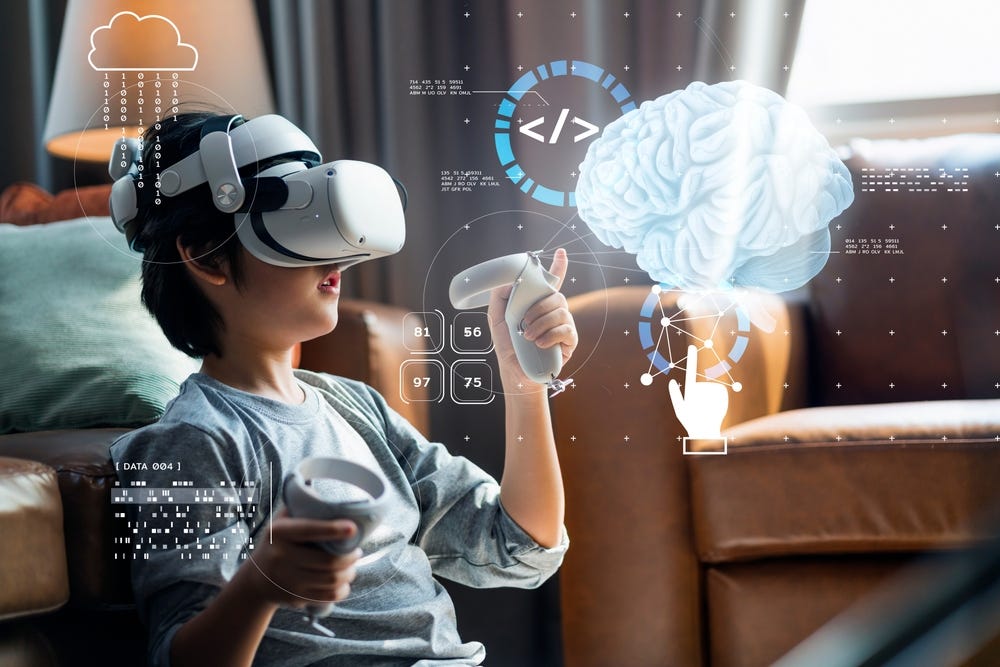
Discover how Extended Reality (XR) and Situated VR are upgrading human experience by merging digital and physical spaces. Explore real-world examples, data, FAQs, and actionable insights for 2025 and beyond.
Reality as we know it is being rewritten. With Extended Reality (XR) and Situated Virtual Reality (VR), digital overlays and physical spaces are converging. From workplaces to classrooms and entertainment arenas, this transformation signals a historic “upgrade” in how humans perceive, interact with, and live within both worlds—virtual and tangible.
What Does “Reality Upgrade” Actually Mean?
Reality is no longer static. When experts ask, “Is reality itself about to be upgraded?” they mean a fundamental shift in human perception—from observing through screens to living inside digitally-augmented environments.
This shift is made possible by technologies that extend, mix, and situate digital content within physical space.
Key Terms You Should Know
- Extended Reality (XR): The umbrella that includes VR, AR, and MR, merging digital content with real-world environments.
- Virtual Reality (VR): Fully immersive simulated environments that replace physical reality.
- Augmented Reality (AR): Adds digital overlays onto the physical world through smartphones or glasses.
- Mixed Reality (MR): Digital and physical objects coexist and interact.
- Situated VR / XR: Experiences anchored to real-world contexts—like virtual training in an actual factory or a hybrid classroom where students and avatars share space.
- Spatial Computing: Technology that maps and interacts with physical surroundings for seamless digital integration.
In essence, the “upgrade” is a move from screen-based digital use to embodied digital participation—reality infused with interactivity, context, and emotion.
Why Now? The Perfect Storm Driving Reality’s Upgrade
1. Industry Momentum
According to Fortune Business Insights, the global XR market will grow from US $183.96 billion in 2024 to US $253.50 billion in 2025, and is forecast to reach US $1.625 trillion by 2032—a CAGR of 30.4 %.
A parallel forecast predicts a 32.9 % CAGR between 2024–2030, led by enterprise adoption.
Even real estate is going immersive—over 1.4 million agents are expected to use XR-based property visualization tools by the end of 2025.
2. Technological Leap
- AI + XR Fusion: Artificial Intelligence is powering object recognition, scene understanding, and natural interaction.
- Next-Gen Headsets: Devices like HTC Vive XR Elite and Apple Vision Pro are cutting-edge examples. (Wikipedia)
- Spatial Mapping Advances: Cameras, LiDAR, and machine learning create life-accurate digital twins of real spaces.
- 5G/6G Connectivity: Enables low-latency, high-fidelity XR streaming.
3. Behavioral Readiness
Humans have already adapted to hybrid digital lives.
After years of remote work, gaming, and social media immersion, the jump to situated XR feels natural.
The pandemic normalized virtual collaboration, which became the testing ground for immersive workspaces and social experiences.
Real-Life Examples of Reality Being Upgraded
1. Workplace Training and Simulation
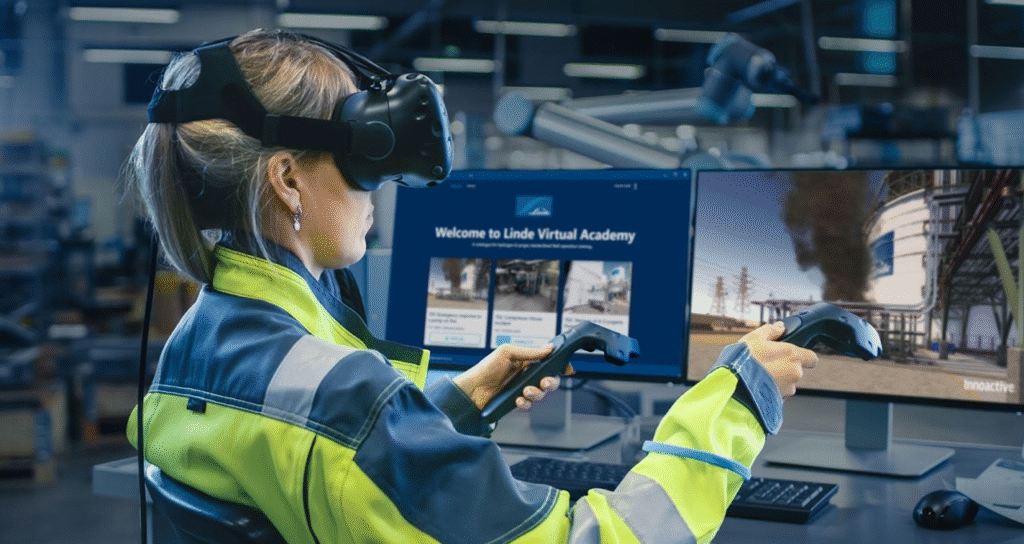
In manufacturing, aerospace, and defense, XR training is now a core competency.
Northrop Grumman and Honeywell deploy XR simulations where engineers overlay digital schematics onto live machinery, enabling maintenance without physical risk.
Benefits:
- Error rates drop by up to 40 %.
- Training time is reduced by nearly 60 %.
- Hands-on skill retention improves dramatically.
This is reality—augmented, accelerated, and smarter.
2. Education & Immersive Learning

Universities such as Stanford and Arizona State are integrating XR classrooms.
Students “walk” through ancient civilizations, dissect 3D organs, or collaborate on digital architecture in shared immersive environments.
The impact:
- Enhanced memory retention
- Higher engagement
- Real-time, multi-location collaboration
Immersive learning anchors education in space, not just on screens.
3. Real Estate & Architecture
Imagine exploring a half-built home before it’s finished—placing furniture, testing lighting, and switching layouts in real time.
This is already happening with situated XR tours, where digital design overlays blend with physical sites.
Agents using XR close deals 30 % faster than traditional methods. (Tech.Realtor)
4. Entertainment & Events
From live concerts to sports games, XR adds a layer of augmented immersion.
Fans can view holographic stats above players or interact with virtual artists sharing the same stage.
Hybrid reality concerts by Fortnite and Travis Scott demonstrated the scale—tens of millions attended, virtually and physically combined.
5. Personal Lifestyle & Consumer Devices
Consumers are already dipping into immersive spaces via fitness apps, AR mirrors, and smart glasses.
With devices like Meta Quest 3, HTC Vive XR Elite, and Apple Vision Pro, people are blending home workouts, design, and entertainment into daily life.
The line between the “digital realm” and “living room” is fading fast.
The Other Side: Is the Upgrade Equitable and Safe?
1. Accessibility & Cost
High-end headsets range from $700 – $3,500, which limits mainstream access.
Broad adoption requires cost-down cycles similar to what smartphones underwent.
2. Physical and Health Considerations
- Motion sickness affects 25 – 40 % of new users.
- Long sessions can cause fatigue, eye strain, or balance issues.
- Proper calibration, breaks, and ergonomic design are key.
3. Privacy & Ethical Issues
Spatial computing means constant environmental scanning—your room, gestures, voice, even eye movement.
Who owns that data?
Until strong privacy frameworks exist, cautious adoption is wise.
4. Content Quality & Developer Hurdles
While hardware advances fast, content ecosystems lag.
Creators need new skills: spatial UX, haptic design, and multimodal storytelling.
5. Physical-Space Safety
Homes and offices must adapt for free movement—clear zones, no tripping hazards, and soft boundaries for safe immersion.
How Will Everyday Life Change with XR?
Let’s peek into what the upgraded reality could look like by 2030.
- Work: Meetings happen in 3D hybrid rooms—colleagues appear as avatars around your real desk.
- Education: Students explore history by “walking through” time.
- Home & Entertainment: Your living room transforms into a virtual gym or movie theatre.
- Social Life: You meet friends in augmented cafés—half digital, half physical.
- Shopping: Try clothes virtually on your reflection or preview furniture in your own room.
In all cases, the key word is presence—the feeling of truly being there.
Practical Advice & Takeaways
For Businesses
- Pilot XR Now: Start with one use-case like onboarding or product demos.
- Design Hybrid Spaces: Combine physical ergonomics with digital layers.
- Track ROI: Measure engagement, training time, or sales efficiency.
- Privacy-First Approach: Implement transparent data policies.
- Inclusive Adoption: Make devices and experiences accessible to all employees.
For Individuals
- Experiment with AR filters and simple XR apps.
- Create a safe area at home for immersive activities.
- Stay updated on device launches and privacy settings.
- Use XR for productivity—remote work, learning, fitness, and creativity.
- Avoid long sessions to reduce fatigue and cybersickness.
Key Takeaways
- Reality’s “upgrade” is happening through XR convergence.
- Enterprise adoption leads, but consumer adoption is near.
- Success requires balancing innovation with ethics.
- Immersive technology enhances human connection—not replaces it.
- The upgrade is both technological and emotional—it reshapes how we feel presence.
Conclusion: The Coming Age of Hybrid Reality
Reality is evolving from static observation to dynamic immersion. The XR revolution isn’t a distant dream—it’s already reshaping how we work, learn, socialize, and live.
Yet this upgrade comes with responsibility: to ensure privacy, inclusivity, and authenticity as digital layers enrich physical life.
The boundary between real and virtual is no longer rigid—it’s a continuum.
The next era belongs to those who can move fluidly between both.
So ask yourself:
Are you ready to experience life in its upgraded form?