
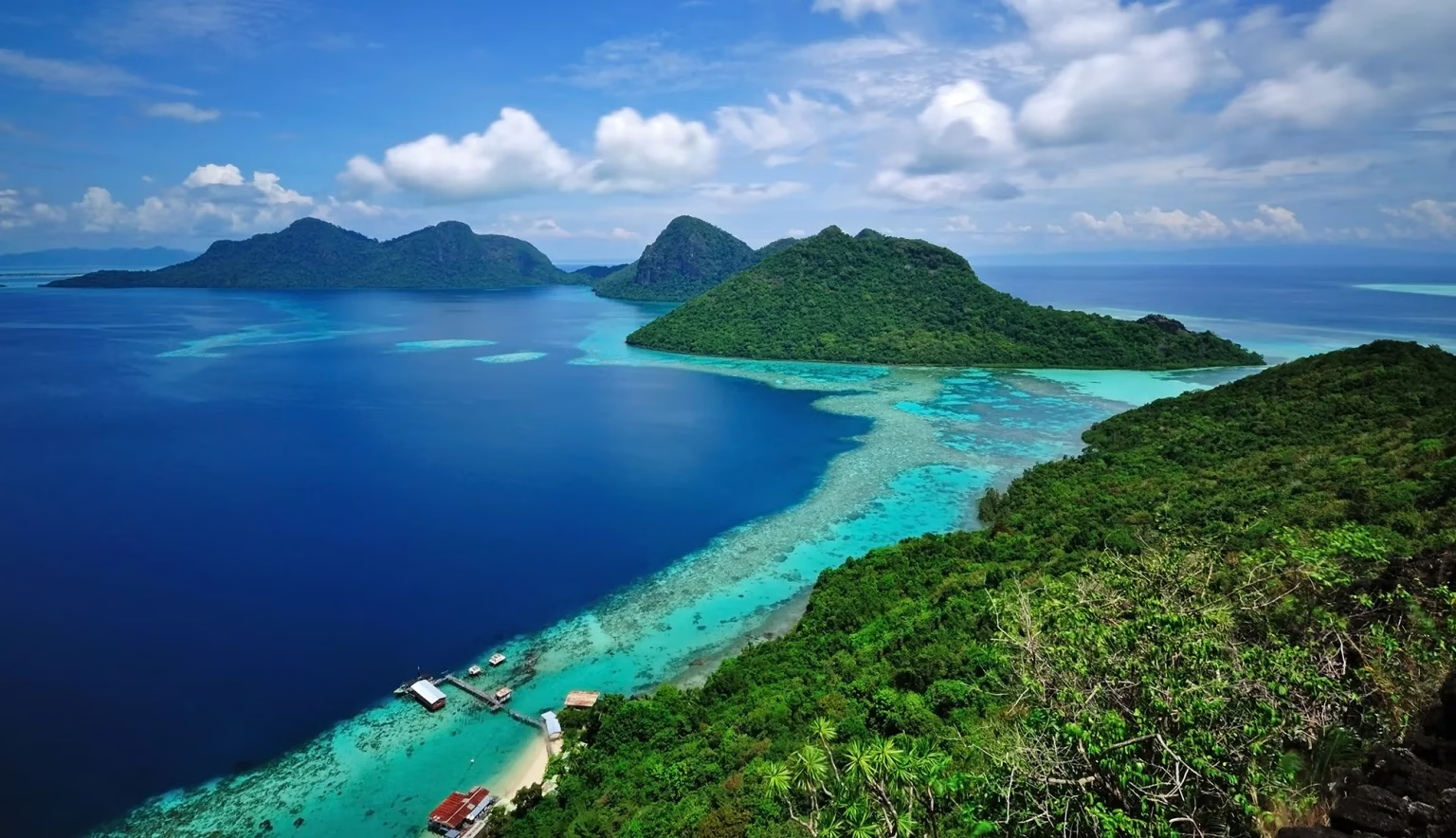
As overtourism reshapes famous island destinations, experienced travelers are quietly turning toward lesser-known islands that offer authenticity, solitude, and preserved natural beauty. From remote volcanic landscapes to culturally rich island communities, these ten underrated islands deliver unforgettable experiences without crowds. If you value discovery over hype, these hidden island escapes deserve a place on your bucket list now—before the world catches on.
Why Are Travelers Actively Searching for Lesser-Known Islands in 2026?
Travel has changed—and not just logistically, but emotionally.
Across the U.S., search trends show growing interest in phrases like “underrated islands,” “hidden island destinations,” “uncrowded islands,” and “islands without mass tourism.” This reflects a deeper shift in traveler psychology.
For many Americans, popular island destinations no longer feel restorative. Overcrowded beaches, inflated prices, and social-media-driven tourism have diluted the sense of escape that islands once promised. What was meant to feel relaxing now feels performative and rushed.
As a result, travelers are redefining what makes a destination “bucket-list worthy.” It’s no longer about popularity—it’s about presence, authenticity, and emotional impact.
That’s why lesser-known islands are rising in appeal. They offer something increasingly rare: the chance to feel like you’ve arrived somewhere meaningful, not just somewhere famous.
What Makes an Island Truly Worth Adding to Your Bucket List?
An island doesn’t need luxury resorts or viral Instagram moments to leave a lasting impression. In fact, many of the world’s most memorable island experiences share the opposite characteristics.
Based on traveler behavior studies, sustainable tourism research, and long-term travel trends, underrated islands tend to stand out because they offer:
- Low visitor density and open space
- Strong preservation of nature and culture
- Minimal commercialization
- Distinct local identity
- A slower, more intentional pace of life
These islands don’t try to impress—they invite you to feel.
1. Saba (Caribbean): The Island That Chose Preservation Over Popularity
Saba is one of the Caribbean’s best-kept secrets—not because it lacks beauty, but because it deliberately limits exposure.
Often referred to as “The Unspoiled Queen,” Saba has no cruise port, no mega-resorts, and no sprawling beaches lined with bars. Instead, it offers dramatic volcanic terrain, lush cloud forests, and some of the Caribbean’s best diving sites.
The island’s population is small, and tourism policies are intentionally conservative. Locals value environmental protection and cultural continuity over rapid growth.
Travelers who visit Saba often describe it as refreshingly real. You don’t come here to be entertained—you come to connect.
Why Saba belongs on your bucket list:
- Exceptional diving with minimal crowds
- Strict environmental protections
- Authentic, community-driven tourism
2. Isle of Skye (Scotland): A Landscape That Feels Almost Mythical
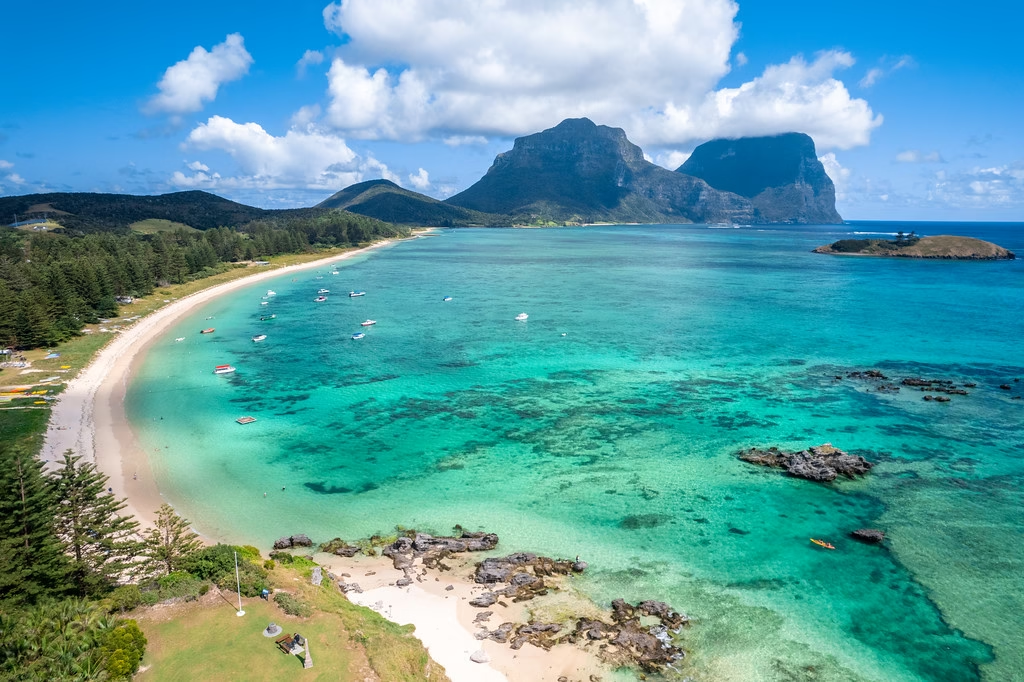
The Isle of Skye doesn’t overwhelm you—it humbles you.
Located off Scotland’s northwest coast, Skye is a place of dramatic cliffs, shifting light, and ancient stories. While Scotland’s Highlands attract heavy tourism, Skye remains surprisingly underexplored by American travelers.
Days here revolve around weather, walking, and wonder. One moment the landscape is shrouded in mist; the next, sunlight breaks through and transforms everything.
Visitors often say Skye doesn’t feel like a destination—it feels like stepping into another era.
What makes Skye unforgettable:
- Vast, untamed scenery
- Rich folklore and historic sites
- Sparse population and open space
3. Isla Holbox (Mexico): The Island That Time Forgot
Isla Holbox sits just north of Mexico’s Yucatán Peninsula, yet feels worlds away from Cancun or Tulum.
There are no cars here—only bicycles and golf carts. Streets are sandy, not paved. Evenings are quiet, and days move at the pace of tides and sunlight.
Holbox is also one of the world’s best places to swim with whale sharks, offering a rare wildlife experience without heavy commercialization.
Travelers who arrive expecting nightlife often leave transformed by the simplicity.
Why Isla Holbox still feels special:
- Car-free living
- Lower costs than major resort towns
- Strong environmental awareness
4. Yakushima (Japan): An Island Shaped by Time and Rain
Yakushima is unlike anywhere else in Japan.
This small island is covered in dense, ancient forests dominated by cedar trees that are hundreds—sometimes thousands—of years old. The island receives frequent rainfall, which only enhances its lush, almost otherworldly atmosphere.
Yakushima’s forests inspired the visual world of Princess Mononoke, and walking its moss-covered trails feels like stepping into a living story.
Despite its UNESCO World Heritage status, Yakushima remains quiet and deeply respectful of nature.
Why Yakushima is bucket-list worthy:
- Ancient ecosystems preserved for centuries
- Deep spiritual and cultural significance
- Minimal tourism pressure
5. Flores (Indonesia): The Indonesia Most Travelers Miss
While Bali captures headlines, Flores quietly delivers one of Indonesia’s most diverse island experiences.
From volcanic crater lakes to coral reefs and traditional villages, Flores offers cultural depth and natural beauty without overwhelming tourism.
It also serves as the gateway to Komodo National Park, yet remains largely untouched itself.
Flores appeals to travelers who want Indonesia as it once was—complex, authentic, and unhurried.
Why Flores stays under the radar:
- Less direct international access
- Focus on local culture
- Large undeveloped areas
6. Lord Howe Island (Australia): Where Tourism Is Intentionally Limited
Lord Howe Island is proof that sustainability works.
Located between Australia and New Zealand, the island strictly limits visitors to preserve its ecosystems. At any given time, only a few hundred tourists are allowed on the island.
This policy has kept beaches pristine, reefs healthy, and experiences intimate.
Most travelers have never heard of Lord Howe simply because it doesn’t market itself loudly.
What makes Lord Howe exceptional:
- Visitor caps that prevent overcrowding
- Unique wildlife and marine life
- Strong environmental protections
7. São Jorge (Azores, Portugal): Raw Beauty in the Atlantic
São Jorge is one of the Azores’ least-visited islands—and one of its most dramatic.
Towering cliffs drop into the Atlantic, creating isolated coastal plains known as fajãs. Life here is shaped by agriculture, fishing, and weather—not tourism trends.
Visitors come for hiking, solitude, and authenticity.
Why São Jorge deserves attention:
- Authentic rural island culture
- Stunning coastal landscapes
- Minimal commercial tourism
8. Koh Yao Noi (Thailand): Quietly Existing Between Chaos and Calm
Between Phuket and Krabi lies Koh Yao Noi, an island that has somehow avoided the fate of its neighbors.
The island maintains a traditional Muslim fishing culture, quiet beaches, and low-rise accommodations. Development exists, but it’s restrained and respectful.
Koh Yao Noi attracts travelers who want Thailand without the intensity.
Why Koh Yao Noi remains underrated:
- No nightlife scene
- Community-led tourism
- Slower pace of life
9. Ilha do Mel (Brazil): Nature Without Interruption
Ilha do Mel translates to “Honey Island,” but its real sweetness lies in what’s missing.
Cars are banned. Construction is restricted. Much of the island is protected forest or untouched beach.
Visitors stay in simple guesthouses and spend days hiking, swimming, and disconnecting.
Why Ilha do Mel feels timeless:
- Strict environmental regulations
- Limited accommodations
- Emphasis on nature over comfort
10. Kodiak Island (Alaska, USA): America’s Wildest Island Experience
Kodiak Island rarely appears on bucket lists—but it should.
This is wilderness on a massive scale. Brown bears outnumber people. Communities are small and deeply connected to the land and sea.
Kodiak isn’t a typical vacation. It’s an experience that changes how you see nature.
Why Kodiak belongs on your list:
- Raw, untamed landscapes
- Minimal tourism impact
- Powerful sense of solitude
Why These Islands Remain Unknown Longer Than Others
In an era of instant virality, these islands stay quiet because:
- Access is limited
- Development is controlled
- Communities resist mass tourism
- Preservation takes priority over profit
Their obscurity is intentional—and valuable.
How to Visit Underrated Islands Responsibly
Traveling to lesser-known destinations comes with responsibility.
Smart travel practices include:
- Supporting local businesses
- Respecting cultural norms
- Avoiding peak seasons
- Leaving no environmental footprint
Preservation ensures these islands remain special.
Frequently Asked Questions
1. Are underrated islands better than famous island destinations?
Ans. For travelers seeking authenticity, space, and cultural depth, underrated islands often provide a richer and more meaningful experience.
2. Are these islands safe for American travelers?
Ans. Yes, most are considered safe, though preparation and awareness of local customs are important.
3. Are underrated islands more affordable?
Ans. Often yes, especially compared to luxury-driven resort destinations.
4. Do these islands have modern amenities?
Ans. Many do, but amenities are typically simpler and more locally focused.
5. What’s the best time to visit lesser-known islands?
Ans. Shoulder seasons usually offer the best balance of good weather and fewer visitors.
6. Are these islands suitable for family travel?
Ans. Some are, particularly for families comfortable with nature-focused and slower-paced travel.
7. Will these islands become crowded in the future?
Ans. Some may gain attention, but many have strict policies limiting overdevelopment.
8. How long should you stay on an underrated island?
Ans. Longer stays are ideal, as these destinations reward slow, immersive travel.
9. Are underrated islands good for solo travelers?
Ans. Yes, especially for reflective travelers seeking connection with nature and culture.
10. Why do travelers regret not visiting places like this sooner?
Ans. Because once destinations become popular, their original character often changes.
Final Reflection: The Best Islands Aren’t the Loudest Ones
The most meaningful travel experiences often come from places you didn’t plan to love.
These islands remind us that discovery still exists—for travelers willing to look beyond rankings and trends. Add them to your bucket list now, not because they’re famous, but because they’re still themselves.




Leave a Reply