
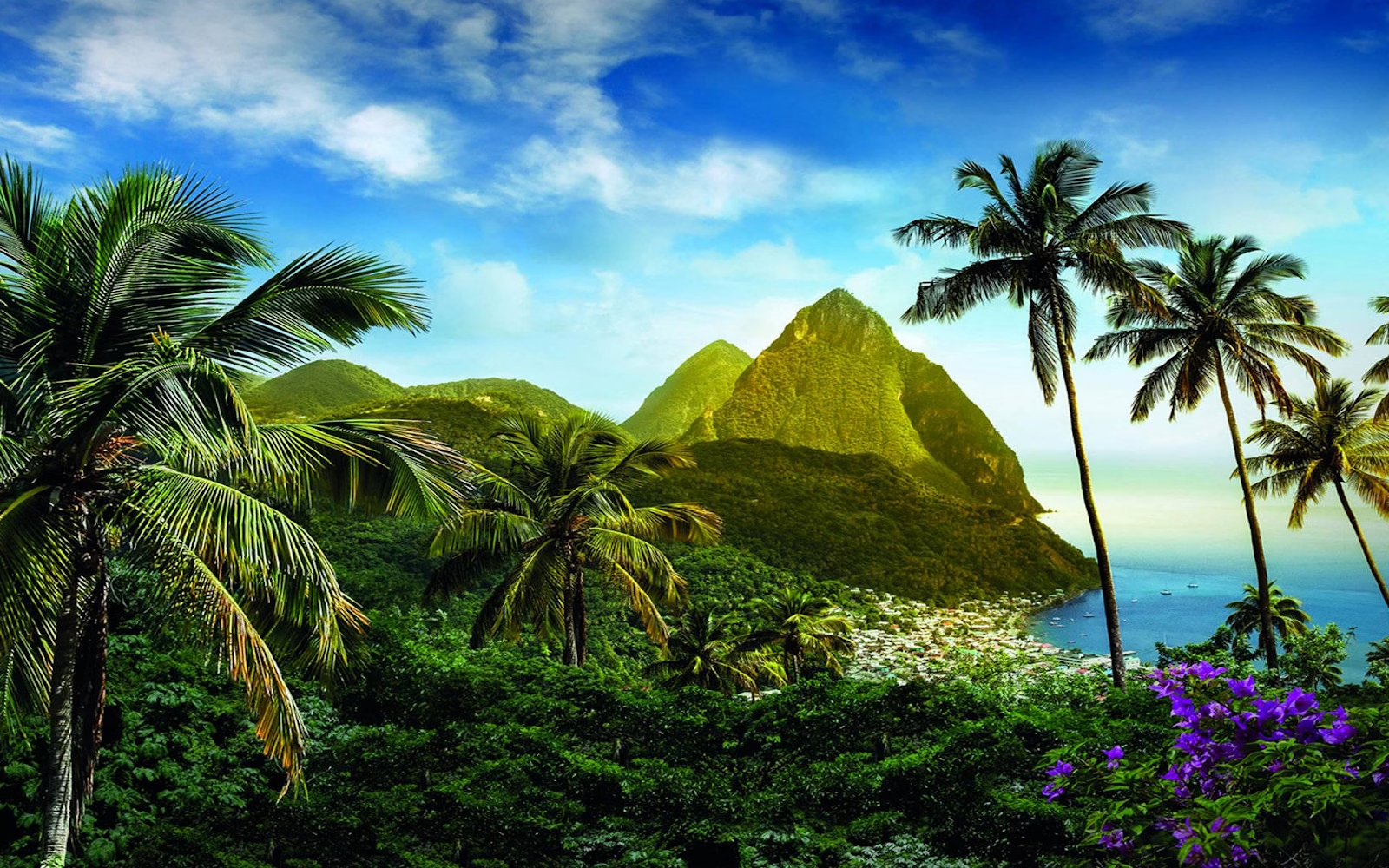
Hidden between Guadeloupe and Martinique, Dominica is a small Caribbean island with an extraordinary concentration of natural wonders. From boiling lakes and active volcanoes to untouched rainforests, hundreds of waterfalls, and year-round whale sightings, Dominica offers more raw, preserved nature than many entire island chains combined. Here’s why scientists, explorers, and travelers are calling it the Caribbean’s most remarkable destination.
The Caribbean You Think You Know—and the Island That Breaks Every Rule
When most Americans picture the Caribbean, the image is familiar: white-sand beaches, luxury resorts, cruise ships, and turquoise water stretching toward the horizon. It’s beautiful—but increasingly predictable.
Then there’s Dominica.
This tiny island doesn’t fit the postcard. It has few sprawling beaches, no mega-resorts, and very little nightlife. Yet those who visit often describe it as the most breathtaking place they’ve ever seen.
Dominica is not trying to compete with the Caribbean.
It’s quietly redefining it.
Where Is Dominica—and Why Do So Few People Know About It?
Dominica is a small, mountainous island located between Guadeloupe and Martinique in the eastern Caribbean. It measures just 29 miles long and 16 miles wide, yet it contains more untouched ecosystems than many countries several times its size.
Despite being English-speaking and politically stable, Dominica has long been overshadowed by larger, more commercialized neighbors. It’s often confused with the Dominican Republic—a completely different country hundreds of miles away.
That confusion, combined with a lack of mass tourism, kept Dominica under the radar for decades.
Ironically, that obscurity is exactly what preserved it.
Why Dominica Is Called “The Nature Island” (And It’s Not Marketing)
Dominica isn’t branded as the Nature Island because it sounds appealing. The title reflects measurable reality.
More than 60% of the island is covered by rainforest, making it the most forested island in the Caribbean. UNESCO has designated large sections of Dominica as World Heritage Sites due to their ecological and geological significance.
Unlike many islands that rebuilt nature after development, Dominica simply never destroyed most of it.
A Landscape That Feels Almost Unreal
Dominica’s geography is unusually dense with natural phenomena.
In a single day, travelers can:
- Hike through cloud forests
- Walk across volcanic ridges
- Soak in natural hot springs
- Swim beneath towering waterfalls
- Snorkel over coral reefs
- Spot whales just offshore
Few places on Earth compress this much ecological diversity into such a small area.
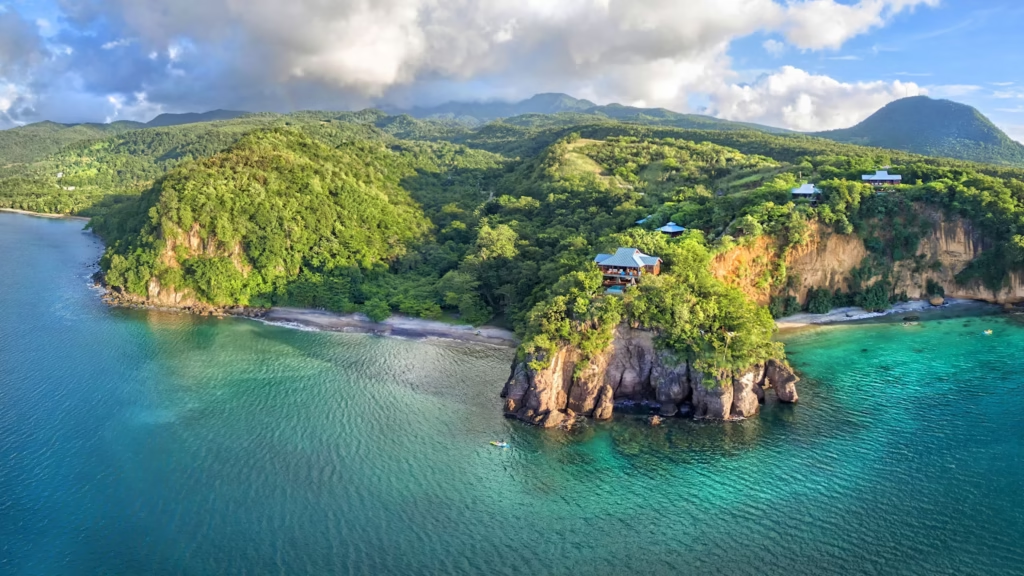
The Boiling Lake: One of the World’s Rarest Natural Phenomena
Dominica is home to the Boiling Lake, the second-largest of its kind on the planet.
This is not a hot spring. It’s a flooded volcanic crater where water literally boils due to geothermal activity beneath the surface. Steam rises constantly, and temperatures can reach near-boiling levels depending on rainfall and volcanic conditions.
Reaching the lake requires a challenging hike through the Valley of Desolation, a surreal landscape of sulfur vents, steaming ground, and alien-looking terrain.
There is nothing else like it in the Caribbean.
Hundreds of Waterfalls—Most Still Unnamed
Dominica has 365 rivers, according to local lore—one for every day of the year. Along those rivers are hundreds of waterfalls, many hidden deep in jungle valleys.
Some of the most well-known include:
- Trafalgar Falls – Twin cascades framed by rainforest
- Middleham Falls – One of the tallest waterfalls in the Eastern Caribbean
- Victoria Falls – Accessible yet wild
- Emerald Pool – A serene waterfall and swimming hole
Unlike heavily trafficked waterfalls elsewhere, many in Dominica remain quiet, uncrowded, and deeply immersive.
Rainforests That Feel Untouched by Time
Dominica’s interior is dominated by dense tropical rainforest that feels closer to the Amazon than to a typical island ecosystem.
Hiking trails pass through:
- Towering gommier trees
- Thick ferns and orchids
- Moss-covered riverbanks
- Bird-filled canopies
The island is home to two endemic parrots—the Sisserou and the Jaco—both found nowhere else on Earth and deeply tied to Dominican identity.
This is not curated nature.
It’s living wilderness.
Volcanoes, Hot Springs, and Steaming Earth
Dominica has nine active or potentially active volcanoes, more than any other Caribbean island.
While eruptions are rare, geothermal activity is constant. Travelers encounter:
- Natural sulfur springs along rivers
- Hot pools hidden in forest clearings
- Steaming vents beneath jungle trails
- Deep gorges carved by volcanic runoff
The island constantly reminds visitors that it’s still being shaped by the Earth itself.
An Underwater World as Dramatic as the Land
Dominica’s natural wonders don’t stop at the shoreline.
Because the island is volcanic, its seabed drops off steeply, creating deep-water habitats close to shore. This makes Dominica one of the best places in the world to see sperm whales year-round.
Underwater highlights include:
- Bubble streams rising from geothermal vents
- Lava-formed reefs and pinnacles
- Sea turtles, rays, and reef fish
- Deep-water marine ecosystems rarely found so close to land
Divers and snorkelers often describe Dominica as one of the Caribbean’s most underrated marine destinations.
Why Dominica Has More Natural Variety Than Entire Island Chains
Most Caribbean islands specialize in one or two natural attractions—beaches, reefs, or rainforests.
Dominica offers all of them at once, plus active geology.
Within a compact area, the island contains:
- Rainforest and cloud forest
- Volcanic mountains
- Freshwater rivers and waterfalls
- Hot springs and fumaroles
- Coral reefs and deep-sea habitats
This level of ecological concentration is extremely rare globally.
Why Mass Tourism Never Took Over Dominica
Dominica’s rugged terrain made large-scale resort development difficult. Instead of forcing it, the island chose a different path.
Tourism developed slowly and intentionally, focusing on:
- Eco-lodges and small hotels
- Local guides and community tourism
- Conservation-driven experiences
- Minimal environmental disruption
There are no massive all-inclusive resorts dominating the coastline. Nature remains accessible—and protected.
What Travelers Say After Visiting Dominica
Many visitors arrive curious but uncertain.
They leave transformed.
Common reactions include:
- “It feels like the Caribbean before tourism.”
- “I’ve never seen so much nature in one place.”
- “It feels untouched—almost sacred.”
- “This is real adventure travel.”
Dominica doesn’t impress with luxury.
It overwhelms with wonder.
Is Dominica Safe and Accessible for American Travelers?
Yes—with the right expectations.
Dominica is English-speaking, politically stable, and welcoming. However, it is not a plug-and-play resort destination.
Visitors should expect:
- Winding mountain roads
- Limited nightlife
- Few luxury shopping options
- An emphasis on outdoor adventure
For travelers who value nature over convenience, this is a feature—not a flaw.
Best Time to Visit Dominica
Dominica is lush year-round, but timing matters.
- Dry season (December–May): Best for hiking and exploring
- Wet season (June–November): Fewer crowds, dramatic waterfalls, occasional heavy rain
Even during the rainy season, nature feels more alive than anywhere else.
Who Dominica Is (and Isn’t) For
Dominica is perfect for:
- Nature lovers
- Hikers and divers
- Eco-tourists
- Travelers seeking authenticity
It may not appeal to:
- Resort-focused travelers
- Party-centric vacations
- Luxury-first tourists
Dominica rewards curiosity, patience, and respect for nature.
What Dominica’s Popularity Says About Modern Travel
Dominica reflects a powerful shift in travel preferences.
Americans increasingly want:
- Experiences over amenities
- Nature over nightlife
- Authenticity over polish
- Sustainability over spectacle
In that sense, Dominica isn’t just special—it’s aligned with the future of travel.
Practical Tips for First-Time Visitors
- Hire local guides for hikes and canyoning
- Bring sturdy footwear—terrain is real
- Rent a vehicle or hire trusted drivers
- Respect protected and sacred sites
- Build flexible days into your itinerary
Dominica isn’t rushed.
Neither should you be.
Key Takeaways: Why Dominica Stands Alone
- Most forested island in the Caribbean
- Home to the Boiling Lake
- Hundreds of waterfalls and rivers
- Year-round whale watching
- Minimal overdevelopment
- Deep ecological preservation
This is not just another island.
It’s a living ecosystem.
Frequently Asked Questions (Trending Search Queries)
1. What island has the most natural wonders in the Caribbean?
Ans. Dominica is widely considered the most nature-dense island in the Caribbean.
2. Is Dominica better than other Caribbean islands for nature lovers?
Ans. Yes. It offers rainforests, volcanoes, waterfalls, and marine life in one compact location.
3. Why is Dominica called the Nature Island?
Ans. Because more than half the island is rainforest with preserved ecosystems.
4. Is Dominica safe for tourists?
Ans. Yes. It’s considered safe, stable, and welcoming.
5. Does Dominica have good beaches?
Ans. Beaches exist, but nature and adventure are the main attractions.
6. Can Americans travel easily to Dominica?
Ans. Yes, though flights usually connect through nearby islands.
7. Is Dominica expensive to visit?
Ans. Costs are moderate and often lower than resort-heavy destinations.
8. What wildlife can you see in Dominica?
Ans. Parrots, whales, dolphins, reptiles, and diverse marine life.
9. Is Dominica good for hiking?
Ans. It’s one of the best hiking destinations in the Caribbean.
10. Will Dominica remain undeveloped?
Ans. The island prioritizes sustainable tourism, making mass overdevelopment unlikely.
Final Thought: Dominica Isn’t Competing—It’s Preserving
Dominica doesn’t try to outshine the Caribbean with luxury or nightlife.
Instead, it offers something increasingly rare: nature without compromise.
In a world where destinations are becoming interchangeable, Dominica stands apart—not because it changed, but because it refused to.
For travelers seeking wonder over convenience, this tiny island isn’t just special.
It’s unforgettable.



Leave a Reply