
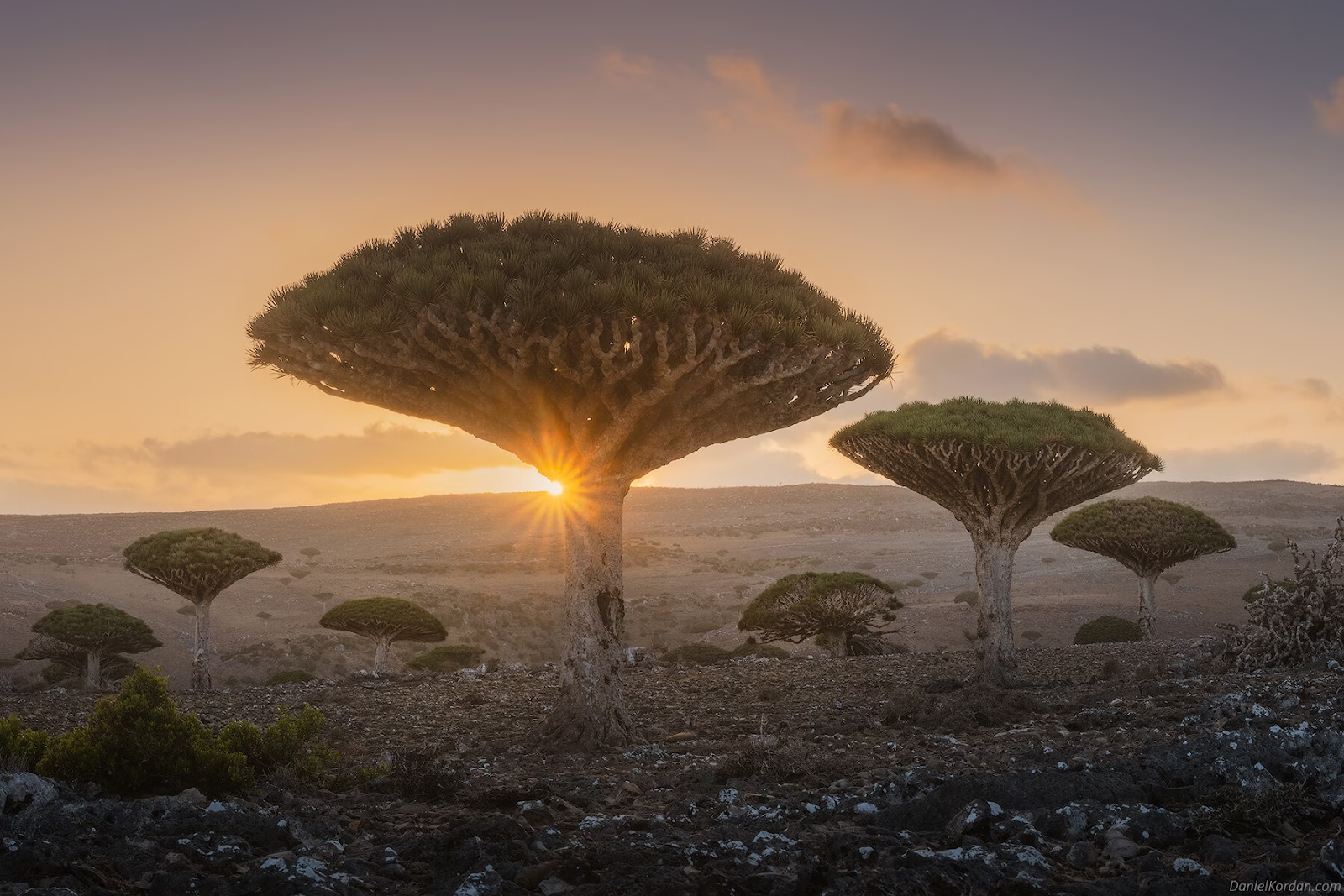
Hidden deep in the Arabian Sea, Sokotra Island feels untouched by modern time. With alien-like landscapes, ancient trees found nowhere else on Earth, and communities living as they have for centuries, the island leaves visitors stunned. As mass tourism reshapes most destinations, Sokotra remains a rare reminder of how the world once was—and why that matters now more than ever.
In a world where nearly every destination is mapped, filtered, and optimized for convenience, it’s hard to imagine a place where time still moves slowly. Yet such a place exists—and for those who reach it, the experience feels almost unreal.
Sokotra Island is not just remote. It is fundamentally disconnected from modern life in a way few places remain. Visitors don’t simply travel here; they step into an environment shaped by millions of years of isolation, where landscapes feel prehistoric and traditions continue without interruption from the digital age.
For many travelers, the most common reaction upon arrival is disbelief.
They don’t ask “What can I do here?”
They ask “How is this place real?”
Where Exactly Is Sokotra Island?
Sokotra is an archipelago located in the Arabian Sea, roughly 240 miles east of the Horn of Africa. Politically, it belongs to Yemen, but geographically and culturally, it feels detached from everything around it.
For centuries, strong monsoon winds and difficult sea conditions limited access to the island. Unlike other strategic trade hubs that developed ports, cities, and empires, Sokotra remained isolated. That isolation became its greatest protection.
According to UNESCO, Sokotra contains one of the highest concentrations of endemic species on Earth, with more than a third of its plant life found nowhere else. This is why scientists often describe it as a “living laboratory” of evolution.
Why Do People Say Sokotra Looks Like Another Planet?
The comparison to an alien world isn’t poetic exaggeration—it’s observational.
The Dragon’s Blood Trees
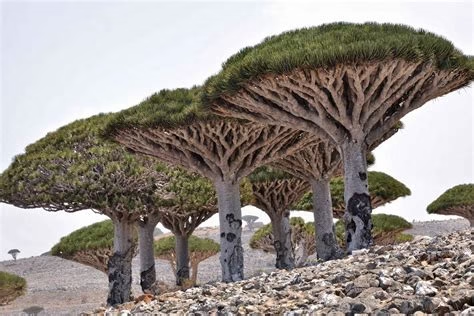
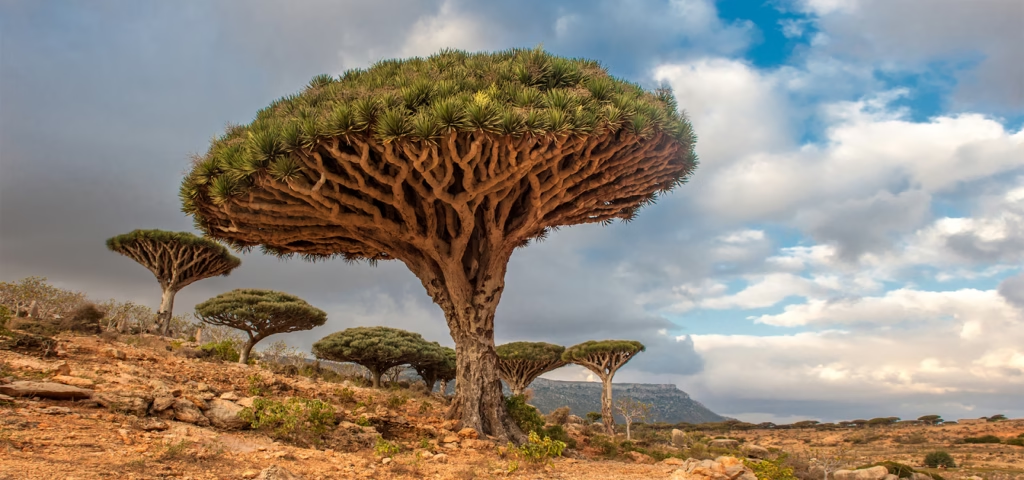
Sokotra’s most iconic feature is the dragon’s blood tree, a bizarre, umbrella-shaped plant that seems frozen in time. Some of these trees are believed to be hundreds of years old. When their bark is cut, they release a deep red resin once traded across ancient civilizations for medicine, dye, and ritual use.
Walking through a forest of these trees feels less like hiking and more like time travel.
Landscapes Shaped by Isolation
Beyond the trees, Sokotra’s terrain shifts dramatically:
- Limestone plateaus carved by wind
- White sand dunes rising beside turquoise seas
- Jagged cliffs overlooking untouched coastlines
Because the island evolved independently for millions of years, its ecosystems developed without outside interference. The result is scenery that doesn’t resemble anywhere else on Earth.
How Has Life on Sokotra Remained So Unchanged?
While nature captures attention, human life on Sokotra is equally remarkable.
There are no luxury resorts, no international hotel chains, and no commercialized entertainment districts. Most villages rely on fishing, herding, and small-scale agriculture, just as they have for generations.
Electricity exists, but it’s inconsistent. Internet access is limited. Cash is essential. Time is measured by daylight, tides, and seasons—not notifications.
The local language, Soqotri, is an ancient Semitic tongue passed down orally. It has no formal written system, meaning history survives through storytelling rather than books or screens.
For visitors, this creates a powerful contrast. While much of the world races forward, Sokotra continues moving at a human pace.
What Is It Actually Like to Visit Sokotra?
Travelers often describe their first few days on the island as disorienting.
Without constant digital stimulation, senses sharpen. Silence becomes noticeable. Conversations slow down. Even sleep patterns change, syncing naturally with sunrise and sunset.
One American traveler described sitting with fishermen who had never left the island. When shown photos of New York City, they laughed—not because it seemed impressive, but because it looked chaotic and strange.
For many visitors, Sokotra becomes a mirror. It doesn’t just show a different place—it reflects how far modern life has drifted from simplicity.
Is Sokotra Safe for Tourists?
Safety is one of the most searched questions about Sokotra, and the answer requires honesty.
Although Yemen has faced political instability, Sokotra itself has remained largely peaceful due to its isolation and strong local governance. Travel to the island is highly regulated, and visitors typically arrive with licensed guides and pre-arranged logistics.
Incidents involving tourists are extremely rare. Locals are known for hospitality and protective attitudes toward guests.
That said, Sokotra is not casual travel. It requires preparation, patience, and respect for local norms.
Why Are Americans Drawn to Places Like Sokotra Now?
Search trends show a growing interest in:
- Digital detox travel
- Slow, intentional tourism
- Pre-modern cultures
- Remote, untouched destinations
After years of constant connectivity, burnout, and algorithm-driven routines, many Americans are seeking places that feel real, quiet, and grounding.
Sokotra offers something increasingly rare:
A reminder that human life doesn’t need to be fast to be meaningful.
How Is Sokotra Different From Other “Hidden” Islands?
Many destinations market themselves as untouched—but few truly are.
Sokotra stands apart because:
- Tourism is strictly limited
- Commercial development is minimal
- Culture exists for locals, not visitors
- Nature remains unaltered
Unlike places that became famous and transformed overnight, Sokotra has resisted reinvention. It hasn’t been optimized for comfort or convenience—and that’s exactly its value.
Practical Advice for Travelers Considering Sokotra
Traveling to Sokotra means trading comfort for perspective.
Important Realities to Know
- Medical facilities are limited
- No ATMs or card payments
- Weather can disrupt schedules
- Infrastructure is minimal
What You Gain Instead
- Unfiltered night skies
- Genuine human connection
- A sense of mental clarity
- A deeper appreciation for time
Most visitors say the challenges are not drawbacks—they are the point.
Can Sokotra Stay This Way Forever?
This is the island’s greatest challenge.
Climate change threatens fragile ecosystems. Increased exposure through social media risks drawing attention faster than conservation can manage it. UNESCO and local authorities actively restrict tourism to protect Sokotra’s balance.
Time may stand still here—but only if it’s protected.
Final Reflection: Why Sokotra Leaves People Speechless
Sokotra doesn’t try to impress.
It doesn’t offer luxury, convenience, or spectacle. Instead, it offers something far more powerful: a glimpse of the world before it was accelerated, optimized, and consumed.
Visitors don’t leave with souvenirs.
They leave with perspective.
And in today’s world, that may be the rarest experience of all.
Frequently Asked Questions (Trending Searches)
1. What island is known for being untouched by time?
Ans. Sokotra Island is widely considered one of the most untouched places on Earth due to its isolation, preserved ecosystems, and limited modernization.
2. Where is Sokotra Island located?
Ans. Sokotra is located in the Arabian Sea, east of the Horn of Africa, and is politically part of Yemen.
3. Is Sokotra safe for American tourists?
Ans. Yes, when visited through licensed operators. The island itself remains peaceful, though careful planning is essential.
4. Why does Sokotra look so different from other islands?
Ans. Millions of years of isolation allowed unique plants and animals to evolve independently, creating alien-like landscapes.
5. Can tourists stay in hotels on Sokotra?
Ans. Most accommodations are eco-camps or homestays. Large hotels and resorts do not exist on the island.
6. How many people live on Sokotra Island?
Ans. Approximately 60,000 people live on the island, mostly in small villages.
7. Is Sokotra a UNESCO World Heritage Site?
Ans. Yes, Sokotra was designated a UNESCO World Natural Heritage Site for its extraordinary biodiversity.
8. What is the best time of year to visit Sokotra?
Ans. October through April offers the most stable weather and travel conditions.
9. Why is Sokotra called the most alien place on Earth?
Ans. Its endemic species and surreal landscapes resemble environments not found anywhere else on the planet.
10. Will Sokotra remain untouched in the future?
Ans. Conservation efforts aim to preserve it, but climate change and global exposure present ongoing challenges.





Leave a Reply