
America hides a surprising collection of islands that feel untouched, uncrowded, and almost private. Far from mass tourism, these secret island escapes offer quiet beaches, protected wildlife, and slow living—without needing a passport. From Georgia’s wild barrier islands to Alaska’s misty archipelagos, these destinations deliver true paradise through isolation, preservation, and authenticity.
Why Are Americans Quietly Searching for “Secret Island Escapes” Right Now?
Across the United States, travel behavior is changing in subtle but meaningful ways. Search trends reveal rising interest in phrases like “quiet island vacations,” “hidden islands in the USA,” “uncrowded beach destinations,” and “places that feel private.”
This shift isn’t accidental.
After years of crowded airports, overbooked resorts, and social-media-driven tourism, many Americans are experiencing what travel psychologists call destination fatigue. Popular beach towns no longer feel relaxing. Once-idyllic islands now come with traffic jams, reservation waitlists, and packed shorelines.
What travelers are craving instead is something deeply human:
- Silence instead of stimulation
- Space instead of spectacle
- Authentic experiences instead of curated backdrops
This growing desire has turned attention toward America’s least-advertised islands—places that never tried to become famous and often worked hard not to.
What Makes an Island Feel Like a “Private Paradise” Instead of a Tourist Hotspot?
Not every island with water and sand qualifies as a true escape. Based on travel studies, National Park Service data, and thousands of firsthand traveler reviews, islands that genuinely feel private tend to share specific characteristics.
They are places where access is intentionally limited, development is restricted, and nature—not nightlife—defines the experience.
Key elements that separate private-feeling islands from crowded ones include:
- Strict visitor caps or ferry limits
- Absence of chain hotels and cruise ports
- Large portions of protected or federally managed land
- Strong local communities focused on preservation
- Natural barriers that discourage mass development
The islands below meet these criteria—and in many cases, exceed them.
Cumberland Island, Georgia: Wild Horses, Empty Beaches, and Untouched Wilderness
Cumberland Island feels less like a vacation destination and more like a preserved memory of what the American coastline once was.
Located off the southern coast of Georgia, over 90% of Cumberland Island is protected land, managed by the National Park Service. Development is tightly restricted, and visitor numbers are capped daily.
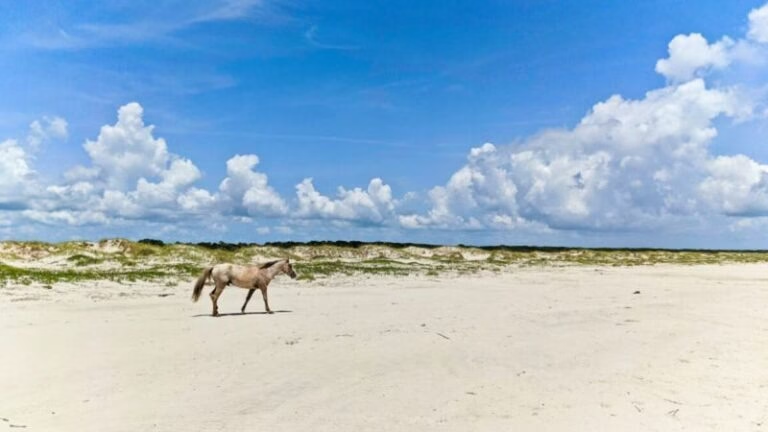
The island is famous for its wild horses, which roam freely across beaches, maritime forests, and grassy dunes. Unlike curated wildlife experiences, these animals are unscripted—sometimes blocking footpaths or grazing near the shoreline at sunrise.
Travelers often describe Cumberland Island as eerily quiet in the best possible way. You can walk miles of beach without seeing another person, even during peak travel months.
Why Cumberland Island truly feels private:
- Daily ferry permits limit visitors
- No commercial resorts or chain hotels
- Transportation restricted to walking or biking
- Vast stretches of empty shoreline
This island isn’t built for convenience. And that’s precisely why it works.
Dry Tortugas, Florida: America’s Most Remote Tropical Escape
Despite being part of Florida, Dry Tortugas National Park feels worlds away from anything familiar.
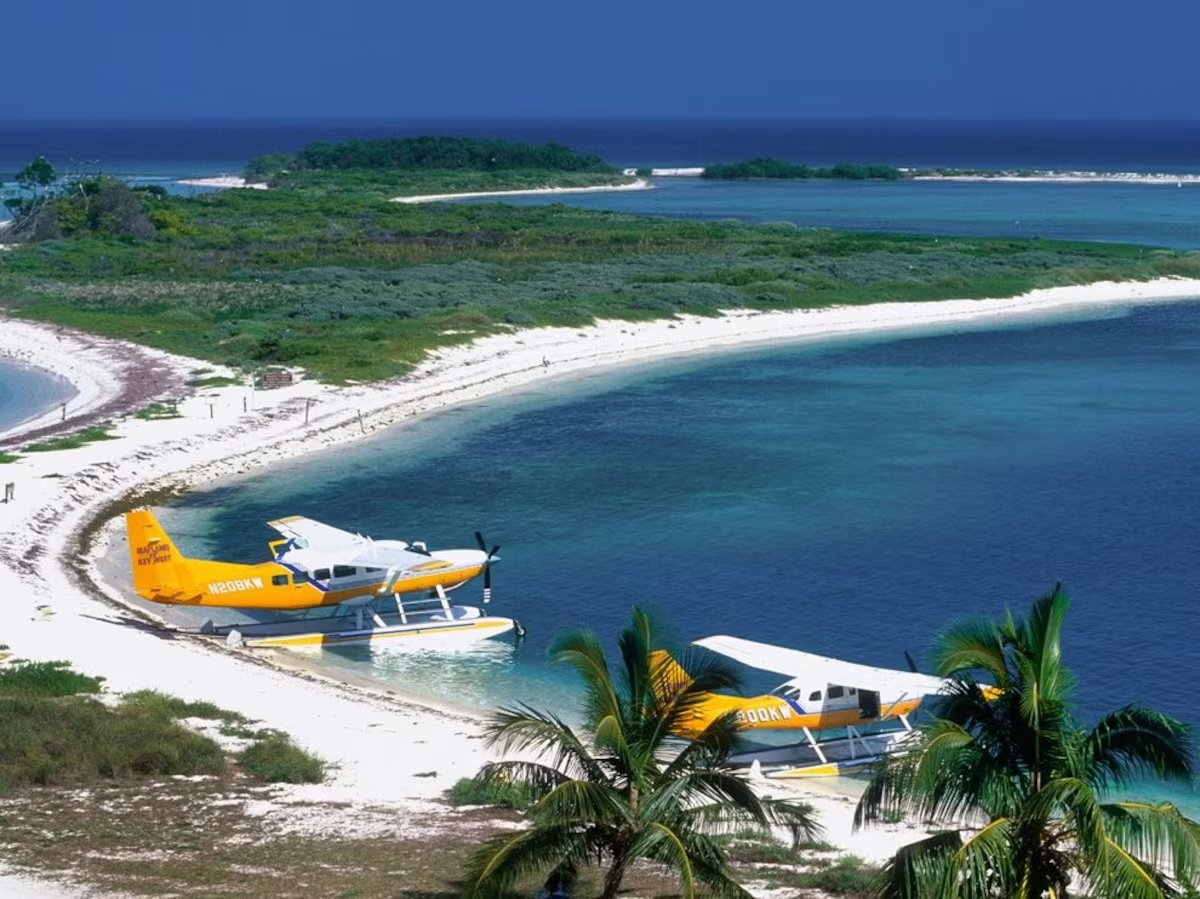
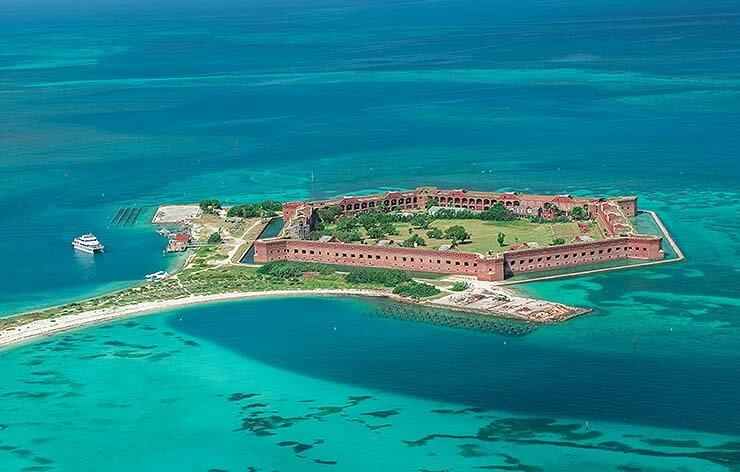
Located roughly 70 miles west of Key West, Dry Tortugas is accessible only by seaplane or boat. There are no roads, no bridges, and no casual drop-ins. This extreme isolation keeps visitor numbers remarkably low.
The park is centered around Fort Jefferson, a massive 19th-century coastal fortress surrounded by some of the clearest water in North America. Coral reefs, tropical fish, and seabirds dominate the landscape.
Most visitors arrive on day trips and leave by afternoon. Those who stay overnight experience something rare in modern America: total isolation.
What makes Dry Tortugas feel like a private island:
- Extremely limited access
- No hotels, restaurants, or nightlife
- Strict overnight camping permits
- Near-zero light pollution at night
It’s one of the few places in the U.S. where silence feels almost complete.
Sapelo Island, Georgia: A Cultural and Natural Time Capsule
Sapelo Island isn’t just secluded—it’s culturally irreplaceable.
The island is home to one of the last remaining Gullah Geechee communities, descendants of enslaved Africans who preserved unique language, foodways, and traditions for centuries.
Tourism exists here, but quietly and respectfully. Visitors must use a county-operated ferry, and accommodations are minimal. There are no resorts, no beach clubs, and no mass-market experiences.
What visitors encounter instead is authenticity: unspoiled beaches, Spanish moss–covered trees, and a way of life that values continuity over growth.
Why Sapelo Island feels private and meaningful:
- Restricted ferry access
- Strong local preservation efforts
- Vast undeveloped landscapes
- Minimal commercial tourism
Sapelo offers solitude with substance, not just scenery.
Isle Royale, Michigan: The Island That Filters Out Almost Everyone
Isle Royale National Park, located in Lake Superior, is one of the least-visited national parks in the continental United States.
Getting there requires planning. Ferries run seasonally. Weather can be unpredictable. There are no roads, no cars, and no easy exits.
As a result, Isle Royale attracts a specific kind of traveler—those seeking deep immersion in nature rather than convenience.
The island is known for its long-running wolf and moose population study, dense forests, rugged shorelines, and near-total absence of human noise.
Why Isle Royale feels completely private:
- Remote location discourages casual tourism
- Wilderness-only infrastructure
- Extremely low visitor density
- No cell service across most of the island
This is solitude in its purest American form.
The San Juan Islands, Washington: Quiet Luxury Without the Crowd
The San Juan Islands prove that an island can be accessible and still feel private.
Located between mainland Washington and Vancouver Island, the archipelago includes dozens of islands—many of which remain overlooked while tourists cluster in a few well-known spots.
Kayaking through quiet coves, watching orcas from rocky shorelines, and staying in locally owned inns creates a sense of understated luxury.
Why the San Juan Islands retain a private feel:
- Tourism spread across multiple islands
- Strong zoning laws limiting large-scale resorts
- Emphasis on eco-tourism and conservation
- Slower pace of life
Privacy here comes from balance, not isolation.
Alaska’s Kodiak Archipelago: Where Wilderness Still Wins
If privacy is measured by space, Alaska’s Kodiak Archipelago may be unmatched.
These islands are vast, rugged, and sparsely populated. Brown bears outnumber people. Villages remain closely tied to fishing and subsistence traditions.
This is not a polished escape. It’s raw, real, and deeply humbling.
Why Kodiak feels like a private frontier:
- Geographic remoteness
- Harsh weather limits tourism volume
- Minimal infrastructure
- Immense undeveloped land
Kodiak isn’t for everyone—but for the right traveler, it’s unforgettable.
Why These Islands Have Stayed Secret (Even in the Age of Social Media)
In an era when destinations go viral overnight, these islands remain under the radar for a reason.
They resist visibility.
- Limited access prevents mass tourism
- No influencer infrastructure
- Strict environmental regulations
- Local communities prioritize preservation
Their quiet existence is intentional, not accidental.
How to Visit These Islands Without Ruining the Experience
Travelers who appreciate these places follow a different mindset.
Best practices include:
- Booking ferries and permits months in advance
- Traveling during shoulder seasons
- Staying longer instead of rushing
- Respecting local customs and wildlife rules
These islands reward patience, humility, and curiosity.
Frequently Asked Questions
1. Are there island destinations in the U.S. that truly feel private?
Ans. Yes. Several U.S. islands feel private due to visitor caps, limited access, and strict development controls, even though they are publicly accessible.
2. Which U.S. island feels most like the Caribbean without crowds?
Ans. Dry Tortugas National Park is often considered the closest Caribbean-like experience with crystal-clear water and minimal tourism.
3. Are these secret island escapes expensive?
Ans. Many are more affordable than international island vacations since they eliminate passport costs, international flights, and resort pricing.
4. Can families travel to these islands?
Ans. Yes, though they are best suited for families who enjoy nature-focused, low-entertainment travel.
5. Do these islands have reliable cell service and Wi-Fi?
Ans. Many have limited or no connectivity, which is often considered part of the appeal.
6. What is the best time of year to visit secluded U.S. islands?
Ans. Late spring and early fall generally offer fewer visitors and comfortable weather.
7. Are these islands safe for solo travelers?
Ans. Yes, especially those managed by the National Park Service, though preparation is essential.
8. Which island is best for wildlife lovers?
Ans. Cumberland Island and Isle Royale are exceptional for wildlife viewing.
9. Do I need special permits to visit these islands?
Ans. Some islands require ferry reservations or camping permits, but no special visas or licenses.
10. Why haven’t these islands become tourist hotspots yet?
Ans. Limited access, strict regulations, and a lack of commercial promotion have kept them intentionally low-profile.
The Real Meaning of a “Private Paradise”
True private paradise isn’t about exclusivity or luxury—it’s about intentional simplicity.
These American islands prove that escape doesn’t require excess. It requires space, silence, and respect for places that choose preservation over popularity.
In a noisy world, these islands offer something increasingly rare: the chance to feel small, calm, and present again.



Leave a Reply