
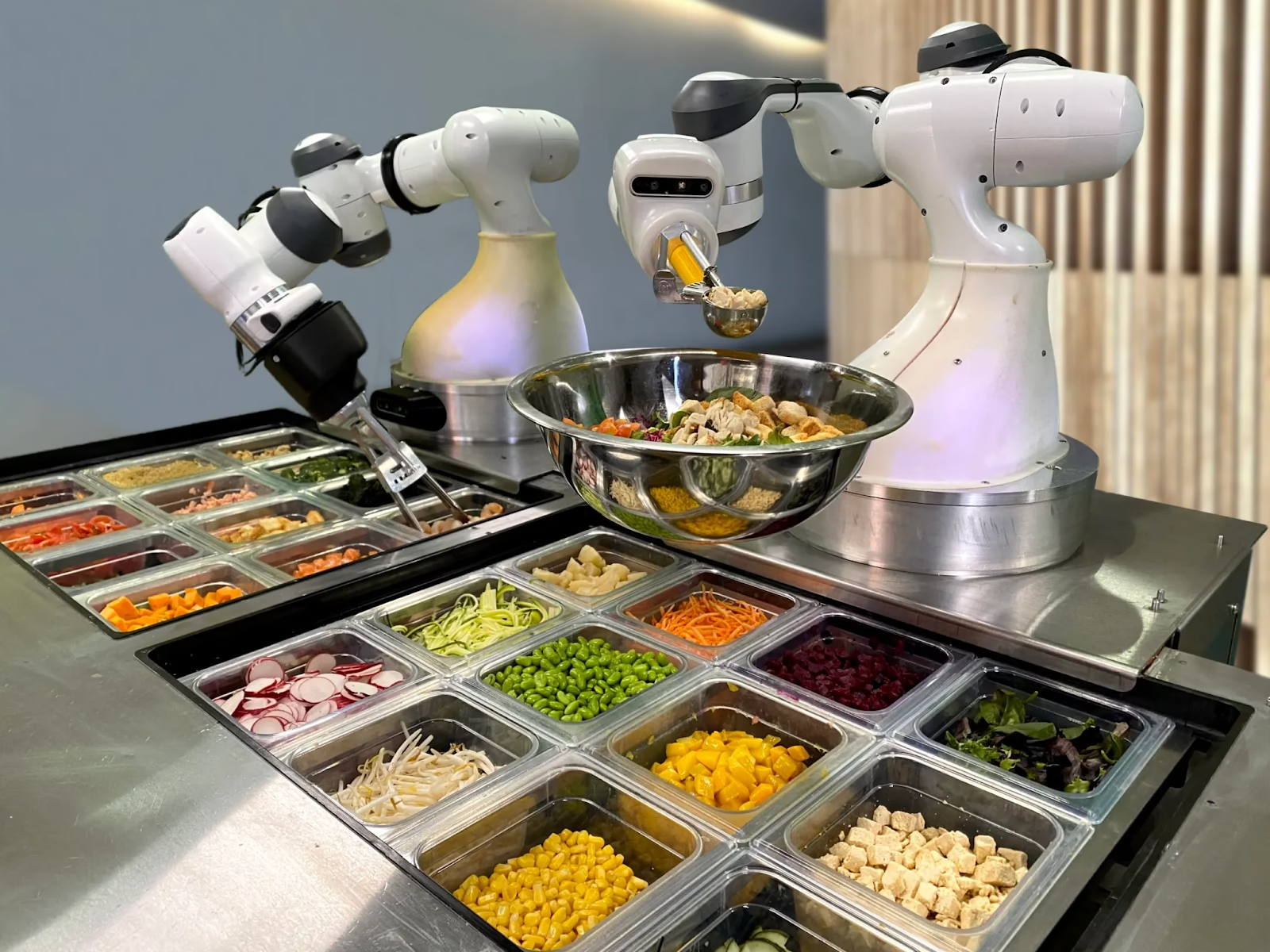
AI-powered restaurants are quietly transforming the American food scene. By combining machine learning, flavor chemistry, and robotics, “AI Chef” kitchens are creating dishes humans could never design alone. These restaurants aren’t replacing chefs—they’re redefining creativity, consistency, and taste itself. This in-depth guide explores how AI Chef restaurants work, where they’re thriving, and why diners say these flavors feel impossible to replicate.
A New Era of Dining Is Emerging in America
In cities like San Francisco, New York, Las Vegas, and Austin, diners are unknowingly participating in one of the biggest culinary shifts in modern history. They sit down, order a meal, take a bite—and pause. Something feels different. The flavors are balanced in a way they can’t quite explain. Familiar, yet strange. Comforting, yet unexpected.
What many don’t realize is that the dish in front of them may not have been created by a human chef at all.
Across the United States, AI Chef restaurants are quietly taking over sections of the dining industry. Some advertise it openly. Others keep it discreet. But behind the scenes, artificial intelligence is reshaping how food is imagined, engineered, and delivered.
This isn’t a gimmick or a novelty phase. It’s a structural shift in how flavor itself is created.
What Exactly Is an “AI Chef” Restaurant?
An AI Chef restaurant is one where artificial intelligence plays a central role in the culinary process, particularly in recipe development, flavor pairing, menu optimization, and kitchen efficiency.
Unlike traditional kitchens that rely solely on a chef’s experience and intuition, AI-powered kitchens use algorithms trained on massive datasets, including:
- Millions of recipes from around the world
- Chemical flavor compound databases
- Customer feedback and behavioral data
- Cultural food trends
- Ingredient availability and seasonality
The AI doesn’t just suggest recipes—it learns, adapts, and improves with every dish served.
In most cases, humans still cook and plate the food. But the creative intelligence behind the menu is digital.
Why AI Chef Restaurants Are Exploding Right Now
The sudden rise of AI-driven dining in the U.S. isn’t accidental. It’s the result of multiple forces colliding at once.
American diners are increasingly bored with predictable menus. According to industry surveys, more than half of U.S. consumers actively seek out new and experimental food experiences. At the same time, restaurants face unprecedented challenges: labor shortages, rising food costs, inconsistent supply chains, and shrinking margins.
AI offers a solution to all of these problems.
It allows restaurants to:
- Innovate faster
- Reduce waste
- Maintain consistency across locations
- Personalize food at scale
Most importantly, AI helps restaurants create something diners can’t easily compare or replicate—which is invaluable in a hyper-competitive market.
How AI Creates Flavors Humans Can’t Replicate
This is the core reason AI Chef restaurants feel so different.
Human chefs cook based on memory, training, culture, and intuition. AI cooks based on pattern recognition at massive scale.
AI systems analyze how individual flavor compounds interact at a molecular level. They understand which aromas enhance sweetness, which textures trigger comfort responses, and which combinations create balance across taste receptors.
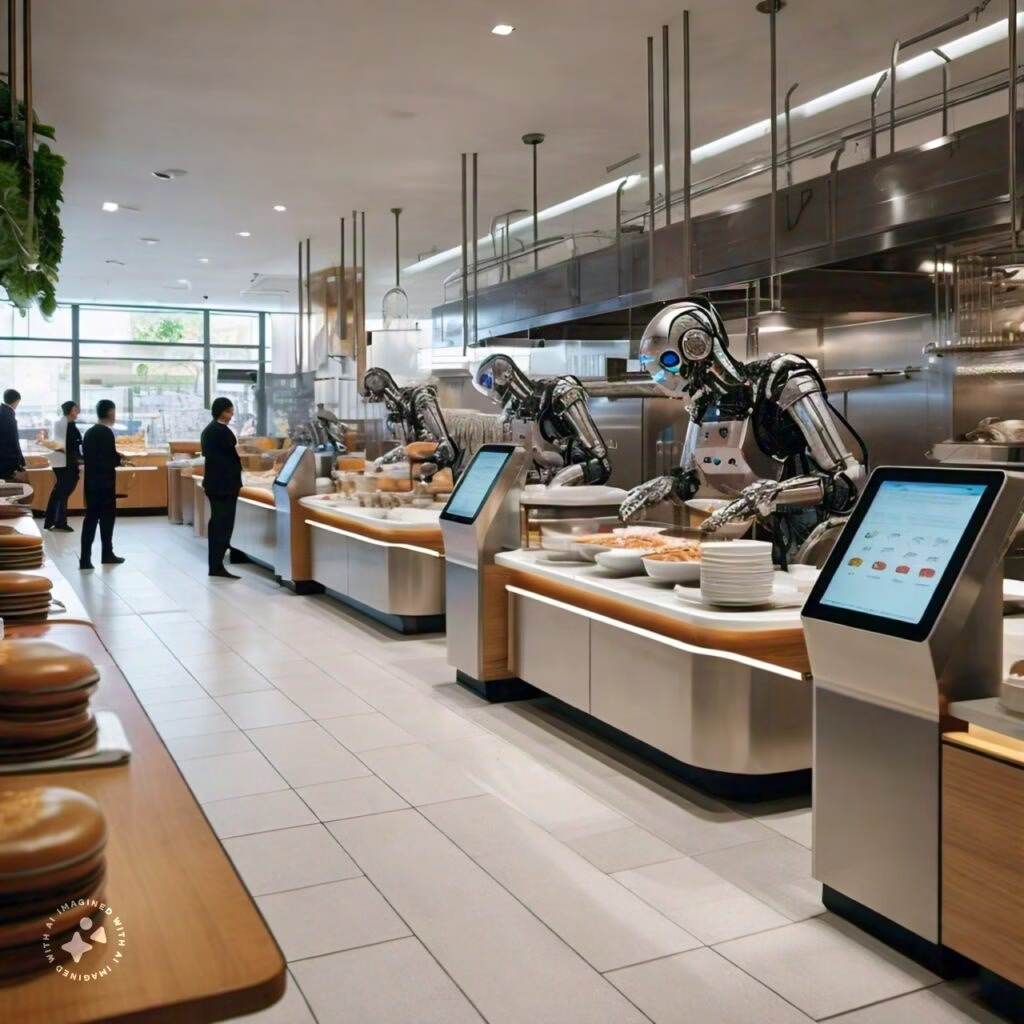
Because AI has no cultural bias, it explores combinations humans might instinctively dismiss.
For example, AI systems have identified pairings like:
- Chocolate with savory umami compounds
- Fruits paired with herbs traditionally used in meat dishes
- Sweet ingredients balanced with bitter or smoky notes
These combinations often sound strange on paper—but taste remarkably harmonious.
Humans think linearly. AI thinks multidimensionally.
Real-Life AI Chef Restaurants Already Operating in the U.S.
AI Chef dining isn’t theoretical—it’s already serving real customers.
In California, robotic kitchens use AI to design menus that adapt daily based on ingredient availability and customer feedback. In Boston, AI systems help chefs develop seasonal menus by analyzing weather patterns and regional taste preferences.
Las Vegas has emerged as a testing ground for AI-driven culinary concepts, where speed, precision, and spectacle matter. Some AI kitchens there can prepare hundreds of meals per hour with near-perfect consistency.
Interestingly, many diners don’t even know AI is involved until they’re told after the meal.
Are These Restaurants Fully Automated?
Despite popular imagination, most AI Chef restaurants are not run entirely by robots.
Instead, they operate using a hybrid model:
- AI designs recipes and optimizes cooking processes
- Robots handle repetitive or high-risk kitchen tasks
- Human chefs oversee execution, plating, and service
This balance preserves hospitality while improving efficiency.
Restaurants that rely solely on automation often struggle with emotional connection. The most successful AI Chef restaurants keep humans visible—and let AI quietly elevate the experience.
Why Diners Say These Flavors Feel “Impossible”
One of the most common reactions from first-time diners is confusion—in a good way.
People often say:
- “I don’t know why this works, but it does.”
- “This tastes familiar and totally new at the same time.”
- “I’ve never had anything like this before.”
AI-designed food often hits multiple sensory notes simultaneously—sweetness, acidity, aroma, texture—in precisely calibrated ratios.
Because AI optimizes for sensory harmony rather than tradition, the results feel both surprising and deeply satisfying.
Blind taste tests conducted by food science organizations have shown that AI-generated recipes frequently score as high as, or higher than, those created by professional chefs alone.
The Science Powering AI Chef Kitchens
At the heart of AI Chef restaurants is computational gastronomy—a field that combines food science, data analytics, and artificial intelligence.
AI systems evaluate:
- Volatile aroma compounds
- Texture and mouthfeel interactions
- Heat transfer behavior
- Psychological responses to flavor
This allows AI to predict how a dish will taste before it’s ever cooked.
Human chefs rely on trial and error. AI reduces trial—and expands creative possibility.
How AI Solves Major Restaurant Industry Pain Points
Beyond flavor innovation, AI Chef systems offer powerful operational benefits.
Key advantages include:
- Consistent food quality across locations
- Reduced food waste through predictive inventory
- Faster menu development cycles
- Lower dependence on hard-to-hire labor
- Personalized meals based on customer data
Some AI kitchens automatically adjust spice levels or portion sizes based on regional preferences—without staff intervention.
For restaurant operators, this isn’t just innovation. It’s survival.
Will AI Replace Human Chefs?
This is the most emotionally charged question—and the answer is clear: No.
AI doesn’t eliminate chefs. It changes their role.
Chefs become:
- Creative directors instead of line workers
- Curators of AI-generated ideas
- Storytellers and experience designers
Much like digital tools transformed graphic design or music production, AI is becoming another instrument in the chef’s toolkit.
The future of dining belongs to collaboration, not replacement.
Trust, Transparency, and Ethical Questions
Some diners worry about authenticity. Others worry about job displacement.
Responsible AI Chef restaurants address these concerns by:
- Being transparent about AI involvement
- Maintaining human oversight for safety and quality
- Retraining staff for higher-skill roles
- Respecting cultural food traditions
Trust matters—especially when technology enters something as personal as food.
Is AI Chef Dining the Future of Restaurants?
Not every restaurant will adopt AI—but many already are, quietly.
Fast-casual chains, delivery kitchens, and high-volume operations are leading adoption. Fine dining is experimenting more cautiously, blending AI insight with human artistry.
As the technology becomes less visible, AI Chef systems will likely become as normal as digital ordering or POS systems.
The future of food isn’t robotic—it’s smarter.
Practical Takeaways for Curious Diners
If you want to experience AI Chef dining for yourself:
- Look for restaurants highlighting “data-driven menus” or “smart kitchens”
- Explore tech-forward cities like San Francisco, Las Vegas, and New York
- Ask how menus are developed
- Keep an open mind—AI food challenges assumptions
You’re not just eating dinner. You’re tasting the next chapter of cuisine.
Frequently Asked Questions (Trending Searches)
1. What is an AI Chef restaurant?
Ans. An AI Chef restaurant uses artificial intelligence to design recipes, optimize flavors, and improve kitchen efficiency, often working alongside human chefs.
2. Can AI really cook better than humans?
Ans. AI can design flavor combinations humans may never imagine, but execution and emotional nuance still rely on human chefs.
3. Are AI Chef restaurants fully automated?
Ans. Most use a hybrid model where AI designs and optimizes while humans handle cooking, plating, and hospitality.
4. Where are AI Chef restaurants most common in the U.S.?
Ans. They are most prevalent in California, New York, Texas, and Nevada.
5. Is AI-designed food safe to eat?
Ans. Yes. AI systems operate under strict food safety standards with human oversight.
6. Do AI Chef restaurants cost more?
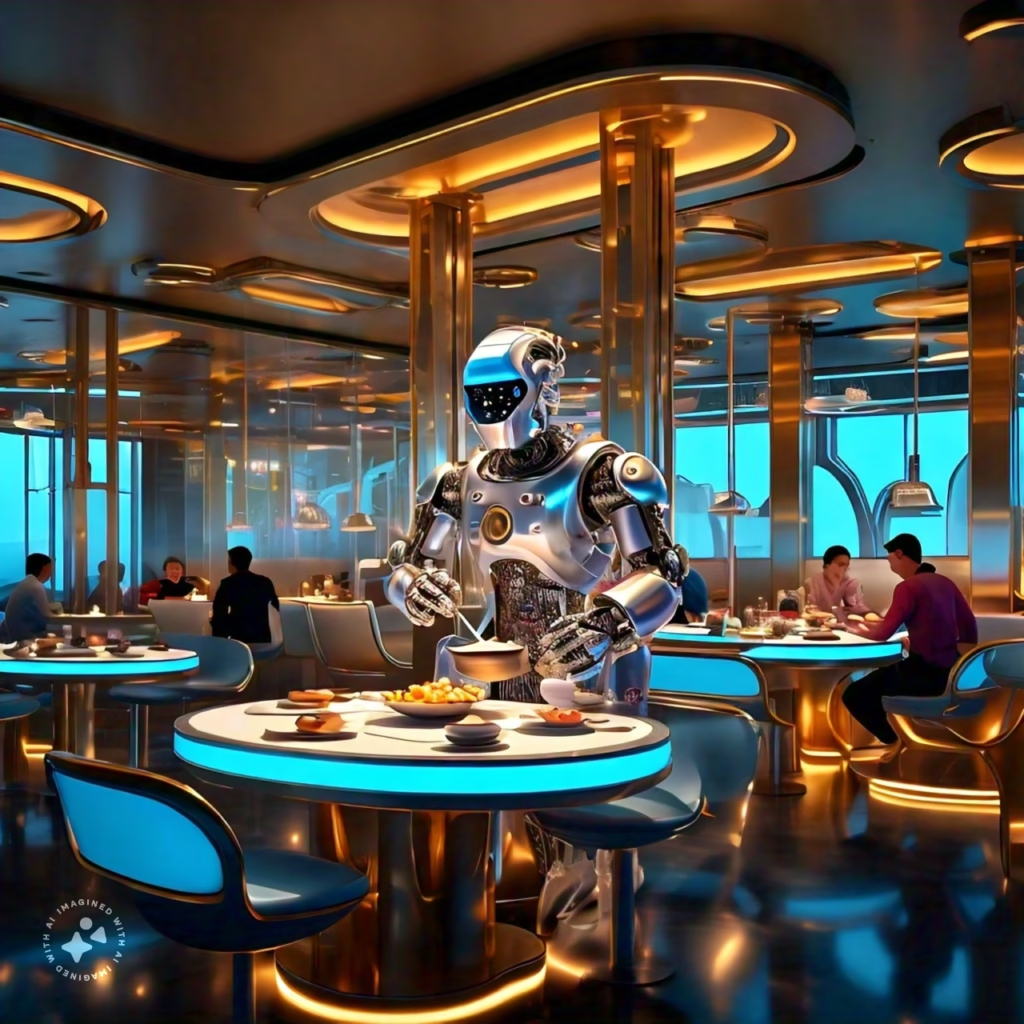
Ans. Prices vary widely, from affordable fast-casual to premium experimental dining.
7. Will AI replace human chefs in the future?
Ans. No. AI enhances creativity and efficiency but still depends on human skill and judgment.
8. How does AI personalize meals?
Ans. AI can adjust recipes based on customer preferences, dietary needs, and regional taste data.
9. Do diners know when AI designs their food?
Ans. Some restaurants disclose it openly, while others integrate AI quietly behind the scenes.
10. Is AI the future of the restaurant industry?
Ans. AI is becoming a foundational tool that will shape how food is created, scaled, and served.
Final Thoughts
AI Chef restaurants aren’t about removing humanity from food—they’re about expanding what’s possible.
By unlocking flavor combinations beyond human intuition and reducing the constraints chefs face, AI is helping create meals that feel both futuristic and deeply satisfying.
You may not always see the algorithm behind your plate—but once you taste the difference, you’ll know something has changed.






Leave a Reply