
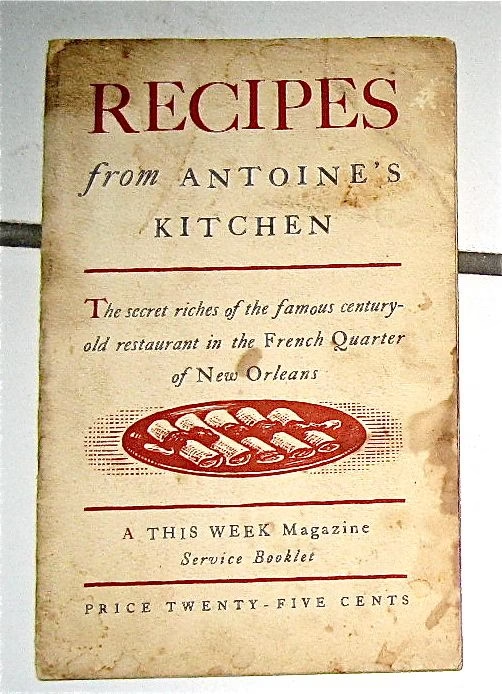
Across America, chefs, home cooks, and food historians are racing to rediscover “lost recipes” once thought forgotten. From Depression-era meals to Indigenous techniques and immigrant family dishes, this unexpected gourmet trend reflects a growing hunger for authenticity, memory, and meaning. Fueled by social media, culinary burnout, and cultural curiosity, lost recipes are quietly reshaping how Americans cook, eat, and define great food.
Something Unexpected Is Happening in American Kitchens
In a Brooklyn apartment, a home cook pores over a fragile church cookbook from 1932, trying to decipher a recipe written with no measurements—just instincts. In Arizona, a chef grinds corn by hand using a technique nearly erased by modern milling. In the Midwest, a family recreates a dish remembered only by its smell.
These scenes are becoming increasingly common.
Across the United States, people are suddenly obsessed with lost recipes—dishes that once mattered deeply but disappeared over time. Not because they were bad. Not because people stopped caring. But because history moved faster than memory.
This is not nostalgia for nostalgia’s sake. It’s something deeper, more urgent, and more cultural than anyone predicted.
What Are “Lost Recipes,” Really?
Lost recipes are often misunderstood as simply old or traditional food. In reality, they are dishes that:
- Were once common or culturally significant
- Fell out of everyday use
- Were never fully written down
- Survive only in fragments—memories, references, or partial notes
Many disappeared because of:
- War or economic collapse
- Forced migration or assimilation
- Industrial food production
- Loss of oral traditions
- Changing tastes and convenience culture
Examples include Indigenous cooking techniques suppressed by colonization, immigrant dishes simplified to fit American pantries, or Depression-era meals created out of scarcity and forgotten once abundance returned.
Cooking a lost recipe is rarely straightforward. It often requires interpretation, research, and experimentation. That challenge is exactly what makes it compelling.
Why Is This Trend Exploding Right Now?
The sudden interest in lost recipes didn’t happen by accident. It emerged from a convergence of social, emotional, and cultural shifts.
A Cultural Backlash Against “Algorithm Food”
For years, food culture online has been dominated by extremes—giant burgers, excessive cheese pulls, shocking food hacks. Eventually, many cooks and viewers burned out.
Lost recipes offer the opposite experience:
- Quiet instead of flashy
- Depth instead of spectacle
- Process instead of shortcuts
They reward patience and curiosity, not virality.
Post-Pandemic Reconnection With Meaning
During the pandemic, millions of Americans cooked more than ever before. According to Pew Research, home cooking increased significantly during 2020–2022, and many people never returned to pre-pandemic habits.
In uncertain times, people look backward for stability. Lost recipes provide a sense of continuity—proof that others survived hardship and fed themselves with care and ingenuity.
Why Chefs Are Leading the Lost Recipe Revival
Some of the strongest advocates for rediscovering lost recipes aren’t home cooks—they’re professional chefs.
Burnout in the culinary industry is widespread. Long hours, thin margins, and relentless pressure to innovate have left many chefs questioning what “creativity” even means anymore.
Lost recipes offer a way out.
Instead of inventing something new, chefs can:
- Research historical foodways
- Collaborate with elders and communities
- Restore forgotten techniques
- Cook with humility instead of ego
Across the U.S., restaurants are now featuring revived regional dishes and explicitly crediting their historical origins. For chefs, this feels less like trend-chasing and more like stewardship.
The Emotional Weight of Cooking Something That Nearly Disappeared
What makes lost recipes powerful isn’t just how they taste—it’s what they carry.
Cooking a lost recipe often involves:
- Family memory
- Cultural survival
- Migration stories
- Adaptation under hardship
A Pennsylvania baker recreated her great-grandmother’s coal-oven bread using only remembered texture and aroma. A Navajo chef revived a pre-reservation corn dish using ancestral grinding methods. A food historian reconstructed a 1918 influenza-era soup designed for the sick.
These dishes are edible history. They don’t just feed the body—they reconnect generations.
Are Lost Recipes Actually Better Than Modern Food?
Not always in a technical sense—but they feel different.
Lost recipes tend to emphasize:
- Seasonal ingredients
- Whole foods
- Minimal processing
- Slow, intentional techniques
They weren’t designed for efficiency or shelf life. They were designed to nourish people using what was available.
In contrast, much modern food prioritizes speed, consistency, and scalability. Rediscovering older recipes often reveals how much texture, adaptability, and resilience were lost along the way.
For many cooks, that realization changes how they think about food entirely.
How Social Media Helped Bring Lost Recipes Back
Ironically, the same platforms that popularized viral food trends are now fueling the lost recipe movement.
Videos titled “I Cooked a Recipe From 1890” or “This Dish Almost Went Extinct” routinely reach millions of views on TikTok and YouTube.
Why?
Because lost recipes offer:
- Built-in storytelling
- Mystery and discovery
- Emotional depth
- Cultural education
Viewers aren’t just watching someone cook—they’re watching someone uncover something meaningful.
Libraries, Archives, and Forgotten Cookbooks Are the New Goldmines
One of the most surprising aspects of this trend is where people are searching.
Lost recipes are being recovered from:
- Public library archives
- Church and community cookbooks
- Immigration records
- Old restaurant menus
- Family letters and diaries
Institutions like the Library of Congress and regional historical societies have reported increased public interest in culinary archives.
Food has become one of the most approachable entry points into history.
The Risk of Romanticizing the Past
Experts caution that not all lost recipes should be idealized.
Some existed due to extreme poverty. Others reflect nutritional limitations or social inequality. Responsible revival requires context.
The goal isn’t to pretend the past was better—it’s to understand it honestly.
When done thoughtfully, reviving lost recipes honors resilience without glorifying suffering.
What This Trend Reveals About Modern Taste
At its core, the hunt for lost recipes isn’t really about food.
It reflects a broader shift in values:
- From novelty to meaning
- From performance to presence
- From endless choice to intention
In a world of disposable experiences, lost recipes feel earned.
How You Can Explore Lost Recipes Yourself
You don’t need professional training or historical credentials.
Simple ways to begin:
- Ask older relatives about dishes they remember but never wrote down
- Visit local libraries for community cookbooks
- Explore regional historical society websites
- Follow culinary historians online
- Try reconstructing recipes using descriptions instead of measurements
The process matters as much as the result.
Key Takeaways: Why the Lost Recipe Trend Is Here to Stay
- Lost recipes offer emotional depth modern food often lacks
- They align with sustainability and whole-food values
- They counter algorithm-driven sameness
- They reconnect people to culture, family, and place
- They redefine “gourmet” as meaning, not luxury
This isn’t nostalgia. It’s reclamation.
Frequently Asked Questions (Trending Search Queries)
1. What are lost recipes?
Ans. Lost recipes are dishes that were once commonly cooked but disappeared due to cultural change, migration, or lack of written records.
2. Why are people suddenly interested in lost recipes?
Ans. Cultural burnout, post-pandemic reflection, social media storytelling, and a desire for authenticity are driving renewed interest.
3. Are lost recipes healthier than modern food?
Ans. Many emphasize whole ingredients, but health depends on context and preparation.
4. Where can I find lost recipes?
Ans. Libraries, archives, family stories, old cookbooks, and historical records are common sources.
5. Are professional chefs really using lost recipes?
Ans. Yes. Many chefs are reviving historical and regional dishes in modern restaurants.
6. Is this trend just nostalgia?
Ans. No. It’s about cultural preservation, identity, and understanding how food systems evolved.
7. Can beginners cook lost recipes?
Ans. Yes. Many are simple, though experimentation is often required.
8. Do lost recipes taste good today?
Ans. Some do, some don’t. Taste isn’t the only goal—context and connection matter.
9. Is there a risk of cultural appropriation?
Ans. Yes. Respectful research and collaboration with communities are essential.
10. Will the lost recipe trend last?
Ans. Likely yes. It aligns with long-term shifts toward authenticity, sustainability, and storytelling.
Final Thought: Why This Trend Matters Beyond Food
The hunt for lost recipes isn’t about recreating the past perfectly.
It’s about refusing to let meaningful knowledge disappear.
In a world obsessed with what’s next, this movement asks a different question:
What did we lose—and what is worth bringing back?
For millions of Americans, the answer begins in the kitchen.






Leave a Reply