
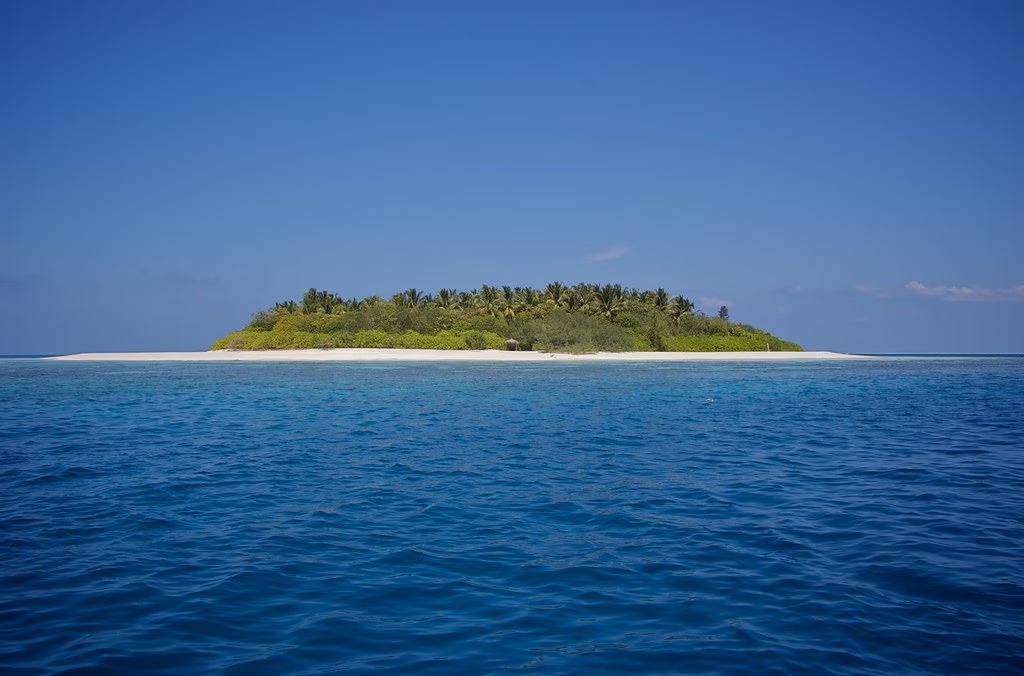
Spending 24 hours on an uninhabited island sounds thrilling, but the reality is far more intense and revealing. From survival challenges and mental shifts to moments of fear, clarity, and unexpected peace, this immersive account explores what truly happens when modern humans disconnect completely from civilization. Backed by real-world insights, this story reveals what isolation teaches us about resilience, simplicity, and human limits.
Why Are Americans So Drawn to Uninhabited Island Experiences?
Over the past few years, Americans have increasingly searched for terms like “deserted island survival,” “24 hours on an uninhabited island,” and “can you survive alone on an island?” This fascination isn’t random. It reflects a deeper cultural response to burnout, digital overload, and nonstop connectivity.
In a world where notifications never stop and schedules are packed to the minute, the idea of being somewhere with no people, no internet, and no obligations feels radical. An uninhabited island represents the ultimate reset—a place where nothing is expected of you except survival.
But romantic images of white sand and turquoise water hide a harsher truth. Isolation strips life down to its essentials, and that can be both enlightening and unsettling.
Where This 24-Hour Island Experience Took Place
This experience mirrors real overnight island survival tests conducted by adventure travelers, marine researchers, and outdoor educators across the world. These islands are typically:
- Small coastal or oceanic islands
- Completely uninhabited year-round
- Free of buildings, roads, and infrastructure
- Accessible only by boat
- Lacking fresh food sources
The rules were simple and strict:
- Arrive shortly after sunrise
- Leave the following sunrise
- Carry limited supplies only
- No outside contact unless life-threatening
No phones. No clocks. No backup comforts.
Once the boat disappeared over the horizon, the reality set in quickly.
Hours 1–3: The Honeymoon Phase of Isolation
The first few hours felt almost euphoric. The beach was untouched, the water crystal clear, and the silence felt peaceful rather than unsettling. With the sun still low and energy levels high, everything seemed manageable.
This phase is deceptive.
Survival psychologists note that early optimism often causes people to underestimate risk. During these initial hours, it’s easy to treat the island like a vacation rather than a test of endurance. The body is still running on stored energy, hydration, and adrenaline.
But islands don’t care about first impressions.
Hours 4–6: When Comfort Starts to Disappear
As the sun rose higher, the environment became more demanding. Shade was limited, and heat reflected off sand and rock. Every movement required effort, and the lack of fresh water suddenly felt significant.
Small inconveniences added up:
- Salt exposure dried skin and lips
- Walking on uneven ground strained muscles
- Hunger arrived faster than expected
Without modern conveniences, even resting required planning. Finding shade, conserving water, and avoiding overexertion became priorities. This is when the island stopped feeling cinematic and started feeling real.
The Biggest Challenge Wasn’t Hunger — It Was Uncertainty
Many people expect hunger to be the hardest part of survival. Surprisingly, it wasn’t.
The real challenge was uncertainty.
Without clocks or phones, time lost structure. Without schedules, the mind searched for reference points. Questions started to repeat themselves: How long until sunset? What if the weather changes? Am I doing enough—or too much?
Psychologists studying isolation environments, such as submarines and polar research stations, note that uncertainty is more mentally taxing than physical discomfort. The human brain craves predictability, and the island offered none.
Hours 7–12: A Psychological Shift Begins
As afternoon faded into evening, something unexpected happened. The mind began to slow down.
With no notifications, no conversations, and no tasks beyond basic survival, thoughts became simpler. Sounds felt sharper—the wind, the waves, distant birds. The absence of noise created a heightened awareness of the present moment.
This mirrors findings from wilderness therapy programs used across the United States, where short-term isolation in nature has been shown to reduce stress hormones and improve emotional regulation.
At the same time, vulnerability increased. The sun set quickly. Temperatures dropped. The island felt larger, darker, and more powerful.
Nightfall: The Hardest Part of the Entire Experience
Night changed everything.
Without city lights or moonlit streets, darkness was absolute. Sounds carried farther. Even small movements triggered alertness. Sleep came in short fragments, interrupted by imagination and instinct.
This response is deeply human. Evolution conditioned us to be cautious in unfamiliar environments after dark. According to National Park Service research, perceived danger increases significantly at night, even in safe locations.
Fear wasn’t constant—but it was present.
Hours 13–18: Exhaustion Brings Unexpected Calm
Sometime during the night or early morning, exhaustion softened fear.
Thoughts quieted. Worry lost momentum. There was nothing left to anticipate—only to endure. Many people report this phase as strangely peaceful, even emotional.
Neuroscientists describe this state as cognitive decompression, when the brain stops processing excess information and settles into a slower rhythm. It’s a mental reset rarely achieved in modern life.
Ironically, this was the moment that felt most meaningful.
Sunrise: The Island Feels Different After 24 Hours
When daylight returned, the island no longer felt hostile.
Nothing about the environment had changed. The waves were the same. The sand was the same. What changed was perception. Familiarity replaced fear.
Survival studies consistently show that humans adapt psychologically faster than they expect. What once felt threatening becomes routine once the mind adjusts.
The island now felt like a place—not a challenge.
What This 24-Hour Experience Reveals About Modern Life
Spending a full day on an uninhabited island strips away illusions.
It reveals how much daily comfort depends on invisible systems—electricity, logistics, supply chains, and constant stimulation. It also shows how quickly the mind can reset when those systems disappear.
Key realizations included:
- Silence is harder than noise
- Convenience hides fragility
- Nature doesn’t rush—but humans do
- Presence replaces productivity
Many participants report returning home with a renewed appreciation for simplicity and a reduced tolerance for unnecessary stress.
Lessons You Can Apply Without Going to an Island
You don’t need to strand yourself to gain perspective.
Practical takeaways include:
- Schedule regular digital detox periods
- Spend time in nature without goals or tracking
- Learn basic survival and self-reliance skills
- Practice being alone without distraction
Mental health professionals increasingly recommend these practices to counter burnout, anxiety, and overstimulation.
Core Survival Insights From the Experience
- Shelter matters more than food in short-term survival
- Water conservation is critical
- Mental resilience outweighs physical strength
- Darkness alters perception dramatically
- Simplicity restores clarity faster than expected
Frequently Asked Questions
1. Can an average person survive 24 hours on an uninhabited island?
Ans. Yes. With basic preparation, calm decision-making, and favorable weather, most healthy adults can safely manage 24 hours.
2. What is the biggest danger on an uninhabited island?
Ans. Dehydration, exposure to sun or cold, and panic are usually greater risks than wildlife.
3. Do you need survival training for a short island stay?
Ans. Formal training helps, but basic knowledge of shelter, hydration, and sun protection is sufficient for short durations.
4. Is it legal to stay on uninhabited islands?
Ans. It depends. Many islands are protected or restricted. Always verify local laws before attempting access.
5. What supplies are most important for 24 hours?
Ans. Water, a cutting tool, basic first aid, sun protection, and an emergency signaling device.
6. Why does time feel slower on an uninhabited island?
Ans. Without clocks, screens, or schedules, the brain processes time differently, making hours feel longer.
7. Is sleeping on an uninhabited island safe?
Ans. Generally yes, with proper shelter and awareness of weather and surroundings.
8. What surprised people most about the experience?
Ans. How mentally challenging silence and uncertainty were compared to physical discomfort.
9. Does the experience change how people view daily life?
Ans. Most report greater appreciation for simplicity and less attachment to constant connectivity.
10. Would people do it again?
Ans. Many say yes—but with more respect for preparation and nature’s power.




Leave a Reply